For three years the pitch for a Malaysian data centre wrote itself: land at a fraction of Singapore's price, power at a fraction of Singapore's tariff, water in abundance, and a government that wanted the investment. In 2026 every clause of that sentence has been revised. On 25 February 2026 the Prime Minister told Parliament that approvals for new non-AI data centres have effectively been withheld for close to two years. Electricity moved to a voltage-based tariff on 1 July 2025 that puts the largest facilities in the most expensive band. Johor and Selangor now charge data centres roughly RM5.30 per cubic metre of treated water — a category that did not exist two years ago. And the tax incentive most investors are chasing, DESAC, is now conditioned on hitting published PUE and WUE benchmarks. Malaysia has not closed the door. It has replaced an open door with a scorecard, and this guide sets out what is on it.
What actually changed, and when
It is worth being precise, because the market commentary is not. Malaysia has not enacted a data centre moratorium. There is no gazetted ban. What exists is a shift in approval posture, expressed through several separate levers pulled at different times by different bodies.
The clearest statement came in Parliament on 25 February 2026, when the Prime Minister said that proposals for data centres unrelated to AI — facilities built essentially to arbitrage cheap power and water — have not been approved for close to two years, while applications bringing advanced technology and AI capability continue to be approved without difficulty. In July 2026 MITI restated the operating principle: projects are approved only where energy and water capacity is sufficient to meet the needs of the population and existing industry first.
Underneath that posture sit four concrete mechanisms, and they are the ones that decide whether a specific project proceeds: the electricity tariff, the grid connection queue, the state water tariff and allocation, and the sustainability benchmarks now attached to the incentive. None of them is a policy statement. All of them are numbers.

Power: the tariff you were quoted is not the tariff you will pay
On 1 July 2025 Peninsular Malaysia's electricity tariff was restructured for the fourth regulatory period (RP4, 1 July 2025 to 31 December 2026). Two things happened at once.
First, the base tariff rose from 39.95 sen/kWh to 45.62 sen/kWh. Second — and far more consequential for a data centre — the non-domestic tariff stopped being organised by business type (the old Tariff B, Tariff E1 and so on) and became organised by voltage level. Heavier, higher-voltage users now face higher energy, capacity, network and retail charges by design. Most large data centres land in the ultra-high voltage category, the most expensive band, with facilities above roughly 100 MW firmly inside it.
The tariff is now unbundled into five components — Energy, Automatic Fuel Adjustment (AFA), Capacity, Network and Retail — which matters because only one of them tracks how much electricity you consume. Capacity and network charges track how much grid you occupy. A facility running at low utilisation during ramp-up pays the capacity and network components anyway.
| Item | Position |
|---|---|
| Regulatory period | RP4: 1 July 2025 – 31 December 2026 |
| Base tariff, Peninsular Malaysia | Raised from 39.95 sen/kWh to 45.62 sen/kWh |
| Structure | Voltage-based, replacing business-type tariffs (Tariff B, E1 and similar) |
| Components | Energy + Automatic Fuel Adjustment (AFA) + Capacity + Network + Retail |
| Indicative component rates | Capacity 4.66 sen/kWh; Network 12.85 sen/kWh; Retail RM10 per month |
| Where large data centres sit | Ultra-high voltage — the highest band; facilities above ~100 MW squarely inside it |
| Reported cost impact | Roughly 10–14% increase for major consumers before surcharges; bills reported up 15–20% for some data centres |
Getting connected: the Green Lane, the ESA, and the queue
Price is one problem; the connection date is the other. TNB introduced the Green Lane Pathway in August 2023 specifically for the data centre segment, backed by a dedicated One-Stop-Centre. Its central promise is speed: energisation in about 12 months, against a normal delivery period of 36 to 48 months — roughly three times faster.
The instrument that unlocks it is the Electricity Supply Agreement (ESA), which is signed with TNB and is in practice a prerequisite before construction begins. As of September 2025, TNB had signed 49 ESAs representing about 7.1 GW of future demand. That figure is the queue, and it is the real constraint behind the government's approval posture: capacity already committed under signed agreements is capacity no longer available to the next applicant. When MITI says approvals depend on sufficiency of supply, this is the number it is looking at.
The practical sequencing lesson is that the ESA and the land are joined. A site with no realistic path to the required capacity within your build programme is not a cheaper site; it is a stranded one. This is the same discipline we set out for industrial land and factory premises, with the difference that power, not title, is the binding constraint.
Water: the line item that appeared out of nowhere
Until 2025 water barely featured in a Malaysian data centre model. It now has its own tariff category, and in some states its own allocation policy.
Ranhill SAJ introduced a dedicated data centre tariff in Johor of RM5.33 per cubic metre with effect from 1 August 2025. Selangor followed at RM5.31 per cubic metre from 1 September 2025, and Penang was reported as matching that treatment by July 2026. Industry expectation is that roughly RM5 per cubic metre becomes the national norm for the category — between RM1.00 and RM1.75 higher than the general non-domestic rate in the same state.
Allocation is the sharper edge. In November 2025 Johor asked investors to postpone water-cooled expansions by around 18 months and halted new approvals for the largest, highest-water-use facilities. Earlier, in November 2024, the state was reported to have rejected close to 30% of data centre applications after weighing renewable energy adoption, water management, resource readiness and economic benefit.
| State / operator | Data centre rate | Effective |
|---|---|---|
| Johor — Ranhill SAJ | RM5.33 / m³ | 1 August 2025 |
| Selangor | RM5.31 / m³ | 1 September 2025 |
| Penang | Matching treatment reported | By July 2026 |
| Premium over general non-domestic rate | RM1.00 – RM1.75 / m³ higher | |
| Johor allocation posture (Nov 2025) | Water-cooled expansions asked to defer ~18 months; new approvals halted for the largest, highest-water-use facilities | |
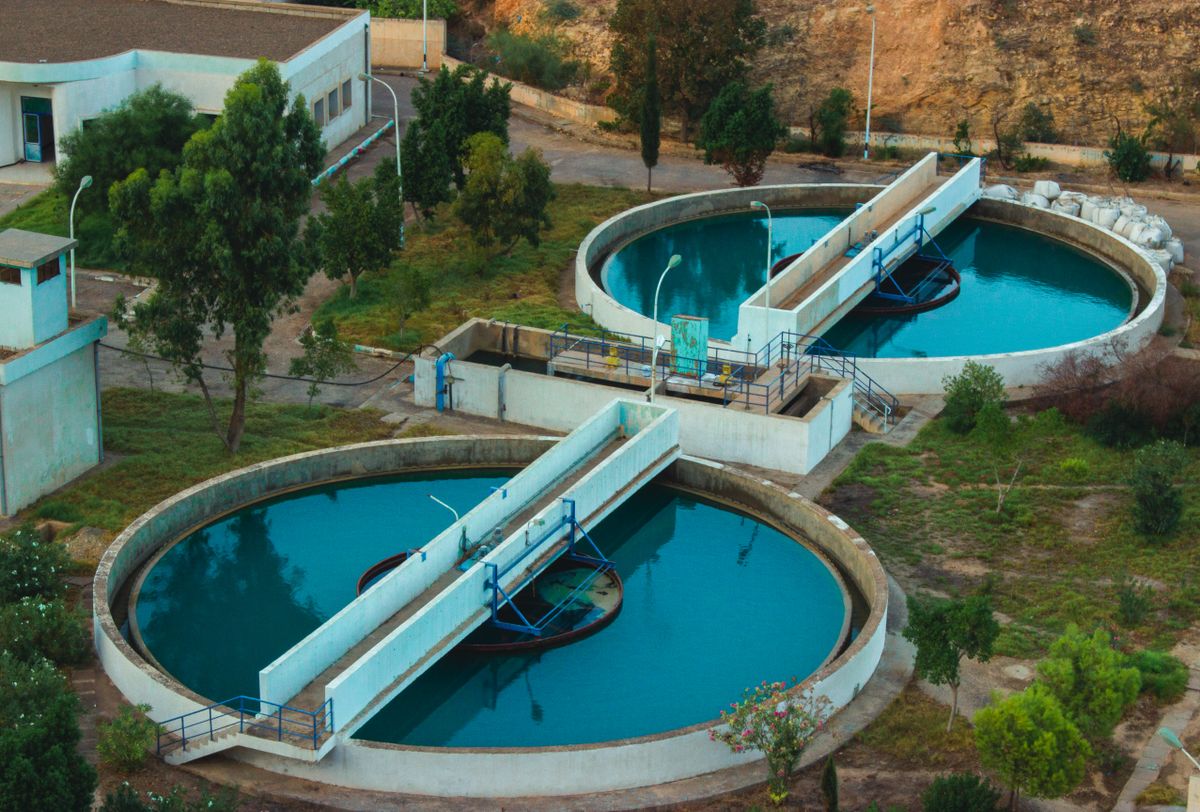
The design consequence is direct. Cooling choice is no longer only a capex-versus-opex question; it is now an approvability question. Closed-loop systems, high-efficiency chillers, direct-to-chip liquid cooling and air-cooled designs all reduce water draw, at the cost of more electricity — and electricity, as shown above, has its own new price. There is no free option; there is only a choice about which constrained resource you lean on, made in front of a regulator that is now measuring both.
The benchmarks that turned into a condition
In December 2024 MITI published the Guideline for Sustainable Development of Data Centre, setting metrics for Power Usage Effectiveness (PUE), Water Usage Effectiveness (WUE) and Carbon Usage Effectiveness (CUE), differentiated by data centre category.
What converted the guideline from advisory to operative is its link to the incentive: applications received by MIDA for tax incentives under DESAC until 31 December 2027 are subject to the conditions in the guideline. A design that misses the benchmark does not merely score badly; it puts the tax incentive at risk.
| Category | Power capacity | Design PUE | Design WUE |
|---|---|---|---|
| Hyperscale | Above 21.25 MW | ≤ 1.4 | ≤ 2.2 m³/MWh |
| Enterprise private (captive), purpose-built or converted building | 0.85 – 4.25 MW | ≤ 1.7 | ≤ 2.0 m³/MWh |
| Ongoing WUE obligation | Recommended design WUE ≤ 2.2 m³/MWh; monitor and disclose actual WUE in the annual sustainability report; improve to ≤ 2.0 m³/MWh over the following ten years | ||
| Third metric | Carbon Usage Effectiveness (CUE) is also prescribed, measuring emissions attributable to the facility | ||
| Link to incentive | Compliance is a condition for DESAC applications received by MIDA until 31 December 2027 | ||
CRESS: buying green electrons directly
One structural condition is worth flagging before the economics: a CRESS renewable-energy developer must be at least 51% Malaysian-owned, and that is imposed as a condition of its section 9 licence rather than as policy preference. If your group intends to develop the generation itself rather than simply buy from it, read our guide to Energy Commission licensing, Solar ATAP and the LSS6 tender first.
Malaysia's answer to the hyperscaler renewable-energy mandate is the Corporate Renewable Energy Supply Scheme (CRESS), launched in September 2024. It permits a corporate consumer to buy renewable electricity directly from a generator over the TNB grid under open access, with TNB acting as network operator rather than energy supplier.
The economics turn on the System Access Charge (SAC) — the toll for using the grid. It was set at RM0.25/kWh for firm output and RM0.45/kWh for non-firm output. Under the revised guidelines the SAC is now fixed for three years in line with the Incentive Based Regulation period, with variability in each regulatory review capped at 15% — a deliberate move to make the charge bankable rather than a rolling risk. Since 1 March 2025 CRESS has been open to existing electricity users, which brings operating data centres into scope rather than only greenfield projects.
The Energy Commission revised the CRESS Guidelines on 29 December 2025. The 2026 package also introduced the new Solar ATAP scheme and changed the standby charge and the battery energy storage system (BESS) requirement under SELCO. For a project whose offtaker has a hard renewable-energy commitment, CRESS is the mechanism that makes that commitment deliverable in Malaysia — and it sits alongside, not instead of, the capital-allowance route described in our guide to GITA and GITE.
DESAC: the incentive, and what it now costs to qualify
The Digital Ecosystem Acceleration Scheme (DESAC) is the incentive most data centre investors are actually applying for. It is administered by MIDA with MDEC, facilitated through the Digital Investment Office, and offers either an investment tax allowance of up to 100% of qualifying capital expenditure, offsettable against statutory income for up to 10 years, or a reduced corporate tax rate — the choice depending on the activity and the investment profile.
Its scope is broader than the building itself: beyond data centres and cloud infrastructure, submarine cable landing stations are recognised promoted activities. Since 2021 the government has approved 21 data centre projects under the scheme, totalling around USD 23.9 billion of investment.
What has changed is the price of admission. Eligibility now turns on the nature of the project — specifically whether it carries genuine AI and advanced-technology substance — as well as the capital expenditure profile, compliance readiness, approvals from the relevant authorities, and the MITI sustainability benchmarks above. A colocation shell with no technology transfer and no AI workload is exactly the profile the February 2026 statement was aimed at. Investors evaluating the adjacent Malaysia Digital route should read this alongside our guide to Malaysia Digital status and the MDLR framework. One consequence of the AI-substance test is worth planning for early: the accelerators that give a facility its AI workload are themselves export-controlled, and moving them into, out of or through Malaysia engages the Strategic Trade Act permit regime — including the built-up servers that contain them.
Where you build is now an energy decision
Johor absorbed the first wave and is consequently the most constrained state — highest water tariff, an explicit deferral request for water-cooled expansion, and the highest rejection rate on record. That does not make Johor wrong; the Johor-Singapore Special Economic Zone remains the strongest strategic location in the country for latency to Singapore. It means Johor is now a place where the energy and water case must be made explicitly rather than assumed.
The corollary is that states with spare grid headroom and water capacity have become genuinely competitive for projects that do not need Singapore-adjacent latency — and that the analysis a foreign investor must do in 2026 is no longer land price per acre. It is: contracted capacity available on this feeder, by when; water allocation available in this district, at what tariff; and does the design clear PUE and WUE for the intended category.
A working sequence for 2026
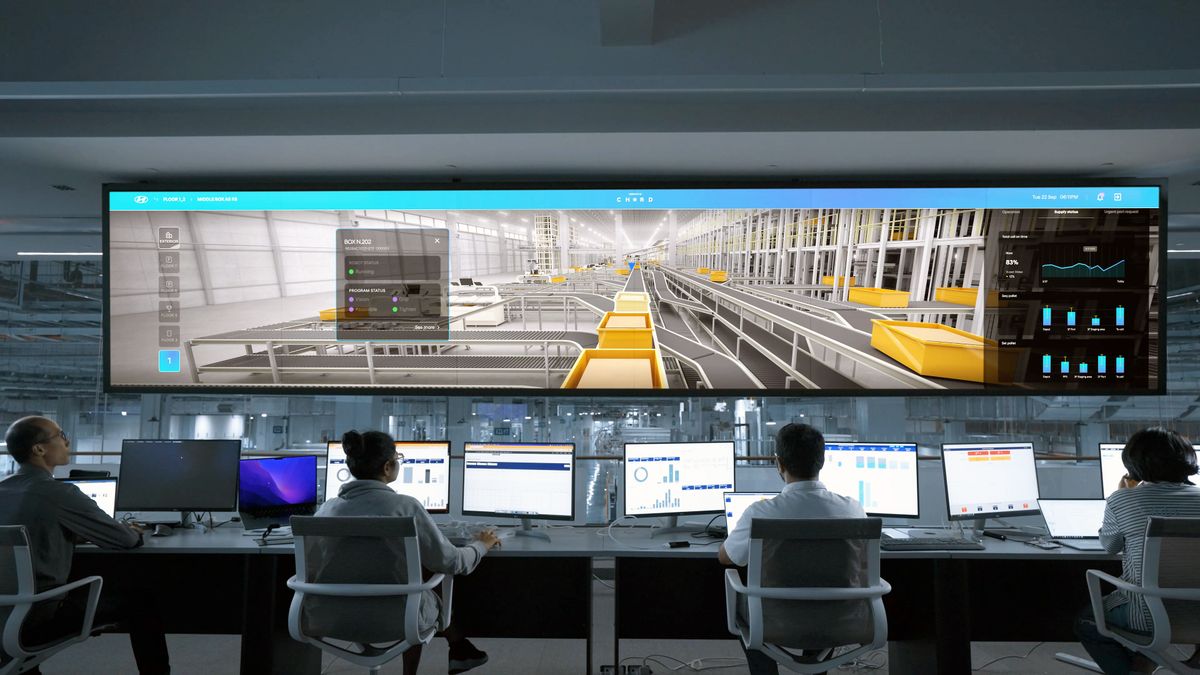
For a foreign investor evaluating a Malaysian data centre this year, the order of operations has inverted. It now runs roughly as follows.
- Define the AI substance first. The workload profile — AI training or inference capability, technology transfer, local capability building — is what determines whether the project is in the approvable class at all. This is a positioning question decided before any site is shortlisted.
- Test power availability before land. Establish what contracted capacity is realistically obtainable on the candidate feeder and on what timeline, and whether the project can enter the Green Lane Pathway toward a 12-month energisation.
- Test water allocation and tariff at district level. Assume roughly RM5.30/m³ for the data centre category and confirm the state's current allocation posture, particularly for water-cooled designs.
- Fix the cooling design against both benchmarks. PUE and WUE targets for your category are known numbers. Design to them, because the incentive application will be assessed against them.
- Decide the renewable strategy. If the offtaker has a renewable mandate, price CRESS with the SAC at RM0.25/kWh firm or RM0.45/kWh non-firm, now fixed on a three-year cycle.
- Then structure the entity and file for DESAC. Incorporation, foreign-equity position, paid-up capital and the incentive application come last — after the physical case is real.
ONEKEY BIZ supports foreign investors entering Malaysia's digital infrastructure sector — entity structuring and foreign-equity positioning, MIDA and DESAC incentive applications, state and utility engagement, land and premises approvals, and the tax and employment layer underneath. If you are assessing a Malaysian data centre, edge site or cable landing project, speak to our team or review our Investment Tax Allowance service.
Frequently asked questions
Has Malaysia actually banned new data centres?
No. There is no gazetted moratorium. What changed is approval posture: on 25 February 2026 the Prime Minister told Parliament that proposals for data centres unrelated to AI — built essentially to arbitrage cheap power and water — have effectively gone unapproved for close to two years, while projects bringing advanced technology and AI capability continue to be approved. In July 2026 MITI restated the principle that approvals depend on energy and water capacity being sufficient for the population and existing industry first. In practice the gate is applied through the electricity tariff, the grid connection queue, state water allocation and the sustainability benchmarks — not through a ban.
How much did electricity actually go up for a data centre?
From 1 July 2025, under regulatory period RP4 (to 31 December 2026), the Peninsular base tariff rose from 39.95 to 45.62 sen/kWh and the non-domestic tariff was restructured from business-type bands (Tariff B, E1 and similar) to voltage-based bands. Most large data centres now sit in the ultra-high voltage category, the most expensive, with facilities above roughly 100 MW squarely inside it. Reported impact is a 10–14% increase for major consumers before surcharges, with some data centre bills up 15–20%. Note the tariff is now unbundled into Energy, AFA, Capacity (about 4.66 sen/kWh), Network (about 12.85 sen/kWh) and Retail (RM10/month) — capacity and network track grid occupancy, not consumption, so a facility at low utilisation during ramp-up pays them anyway.
What does DESAC give, and what does it now require?
DESAC — the Digital Ecosystem Acceleration Scheme, administered by MIDA with MDEC through the Digital Investment Office — offers either an investment tax allowance of up to 100% of qualifying capital expenditure, offsettable against statutory income for up to 10 years, or a reduced corporate tax rate. Promoted activities extend beyond data centres and cloud infrastructure to submarine cable landing stations. Since 2021, 21 data centre projects totalling about USD 23.9 billion have been approved. Eligibility now turns on the nature of the project — genuine AI and advanced-technology substance — plus the capex profile, compliance readiness, authority approvals, and compliance with MITI's sustainability guideline, which is a condition for applications received by MIDA until 31 December 2027.
What PUE and WUE do I have to design to?
MITI's Guideline for Sustainable Development of Data Centre, published in December 2024, sets benchmarks by category. Hyperscale (power capacity above 21.25 MW): design PUE ≤ 1.4 and WUE ≤ 2.2 m³/MWh. Enterprise private (captive) in a purpose-built or converted building (0.85–4.25 MW): design PUE ≤ 1.7 and WUE ≤ 2.0 m³/MWh. A third metric, Carbon Usage Effectiveness (CUE), is also prescribed. The WUE obligation continues after commissioning: actual WUE must be monitored and disclosed in the annual sustainability report, improving to ≤ 2.0 m³/MWh over the following ten years.
Is CRESS worth it, and what does grid access cost?
CRESS — the Corporate Renewable Energy Supply Scheme, launched in September 2024 — lets a corporate buyer contract renewable generation directly over the TNB grid under open access, with TNB as network operator rather than supplier. The cost of grid access is the System Access Charge (SAC): RM0.25/kWh for firm output and RM0.45/kWh for non-firm output. Under the revised guidelines the SAC is fixed for three years in line with the Incentive Based Regulation period, with variability at each regulatory review capped at 15% — making it bankable rather than a rolling risk. Since 1 March 2025 CRESS has been open to existing electricity users, so operating facilities qualify too. The Energy Commission revised the guidelines on 29 December 2025, adding the Solar ATAP scheme and changing the standby charge and BESS requirement under SELCO.
Related services
We handle the process described in this article end-to-end.
- Manufacturing Licence (ICA 1975) ApplicationApply for a MIDA Manufacturing Licence under ICA 1975.
- Exemption from Manufacturing Licence (ICA 1975)Confirmation letter of ML exemption for smaller manufacturers.
- Investment Tax Allowance (ITA) ApplicationApply for the Investment Tax Allowance under Malaysia's New Investment Incentive Framework.
Sources & references
- MIDA — Guideline for Sustainable Development of Data Centre
- MIDA — Digital Ecosystem Acceleration Scheme (DESAC) Guideline
- MITI — Guidelines for Sustainable Development of Data Centre (Media Release)
- MIDA — Powering Up: Navigating the Energy Crossroads of Malaysia's Data Centre Boom
- Malaysian Investment Development Authority (MIDA)
- Ministry of Investment, Trade and Industry (MITI)
This article is general information only, not legal, tax or immigration advice. Policies, thresholds and official fees are set by the relevant Malaysian authorities and may change. Talk to our consultants about your specific situation.