Malaysia has quietly become one of Southeast Asia's most generous jurisdictions for green capital — and 2026 is the year the window matters most. A foreign-owned company that installs solar, upgrades to energy-efficient equipment, or invests in battery storage can claim a Green Investment Tax Allowance (GITA) that offsets up to 70% of its statutory income, while green-service providers can claim a Green Income Tax Exemption (GITE). On top of the tax side, a parallel set of energy-supply schemes — CRESS, NEM/Solar ATAP and the wider National Energy Transition Roadmap (NETR) — now let corporates actually buy or self-generate renewable electricity at scale. For China-invested manufacturers under pressure from customers and global carbon rules to green their supply chains, these two tracks combine into a real cost-and-compliance advantage. This guide sets out exactly what GITA and GITE give you in 2026, the tier structure, who applies where, the hard 31 December 2026 deadline, and how the energy-supply schemes fit alongside.
Two tracks: tax incentives and energy supply
"Going green" in Malaysia splits into two separate systems that are easy to muddle. The first is a tax-incentive track — GITA and GITE — which rewards you for spending capital on qualifying green assets, projects or services. The second is an energy-supply track — CRESS, NEM/Solar ATAP, SELCO — which governs how you actually source or generate renewable electricity. You can use one, the other, or both: install rooftop solar for self-consumption (energy track) and claim GITA on the panels (tax track). Understanding which lever does what is the whole game.
GITA and GITE: what they actually give you
The two headline incentives target different taxpayers:
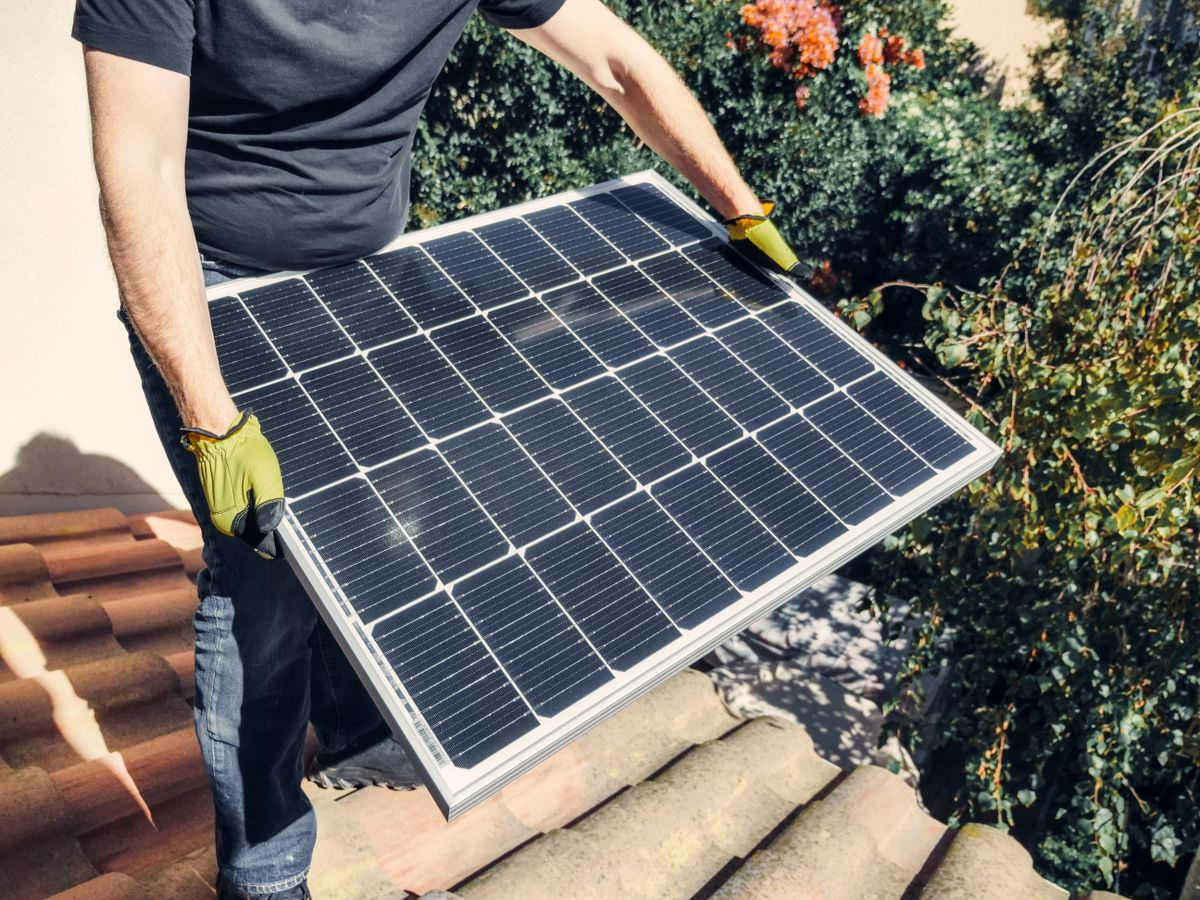
- GITA (Green Investment Tax Allowance) is for companies that buy or invest in qualifying green technology — an allowance on your qualifying capital expenditure (QCE), set off against your statutory income. It comes in two flavours: GITA Asset (green assets for your own consumption, e.g. rooftop solar or energy-efficient machinery) and GITA Project (green projects undertaken for business purposes).
- GITE (Green Income Tax Exemption) is for service providers in the green space — most prominently GITE Solar Leasing, for companies that lease out solar systems — an income-tax exemption on the qualifying green income.
The mechanism matters. GITA is an allowance: it reduces the income you pay tax on, in proportion to what you invested. GITE is an exemption: it takes qualifying green income out of tax altogether. Both are administered against the MyHIJAU Directory — the asset or service must be listed and verified as genuinely green before the incentive attaches.
The 2024 revision: a three-category, tiered structure
The green incentive regime was reshaped in Budget 2024 into a cleaner, tiered structure. There are now three principal categories, and the allowance rate depends on which tier the qualifying asset falls into:
| Category | Who it's for | Administered by |
|---|---|---|
| GITA Asset (own consumption) | Companies installing green assets for their own use (solar, efficient equipment) | MGTC (since Jan 2024) |
| GITA Project (business purposes) | Companies undertaking green projects commercially | MIDA |
| GITE Solar Leasing | Solar-leasing service providers | MIDA |
Within GITA, the allowance rate is set by tier:
| Tier | Allowance on QCE | Set-off cap | Typical qualifying assets |
|---|---|---|---|
| Tier 1 | 100% of QCE | Up to 70% of statutory income | Higher-value assets approved by MoF — e.g. Battery Energy Storage System (BESS), green buildings |
| Tier 2 | 60% of QCE | Up to 70% of statutory income | Renewable-energy systems, energy-efficiency assets |
Read that carefully, because it is where the value sits. A Tier 1 asset gives you an allowance equal to 100% of what you spent, usable to wipe out up to 70% of your statutory income each year until the allowance is fully absorbed. A Tier 2 asset — which is where most solar and energy-efficiency spend lands — gives 60% of your capex as an allowance, again capped at 70% of statutory income per year, with any unused balance carried forward. For a profitable manufacturer, that can convert a large green capex into years of materially reduced tax.
The deadline that decides everything: 31 December 2026
This is the single most important date in the entire regime. Under the current framework, qualifying capital expenditure must be incurred between 1 January 2024 and 31 December 2026, and applications must reach the administering body (MGTC for GITA Asset, MIDA for GITA Project and GITE) within that window. In practical terms:
| Item | Position |
|---|---|
| QCE incurrence window | 1 Jan 2024 – 31 Dec 2026 |
| GITA Asset applications | To MGTC |
| GITA Project / GITE applications | To MIDA |
| Verification basis | Asset/service must be on the MyHIJAU Directory |
Because green projects — procurement, installation, commissioning, verification — take months, a company that wants to capture the incentive on a 2026 investment cannot afford to start planning in Q4. The panels or equipment must be bought, installed and the capex genuinely incurred before year-end, with a MyHIJAU-listed asset and a complete application. Government incentive windows are sometimes extended in later budgets, but no company should build its plan on an extension that has not been announced — treat 31 December 2026 as a firm gate and work backwards.
The energy-supply track: CRESS, NEM/Solar ATAP and NETR
Before reading the schemes below as a menu, note that each one sits on top of a licence. Generating — and in many cases merely operating an installation — is licensable under the Electricity Supply Act 1990, and two of these routes carry a 51% Malaysian-ownership condition written into the licence itself. Our companion guide to Energy Commission licensing, Solar ATAP and LSS6 sets out the section 9 categories, the electrical contractor classes and which routes remain open to a wholly foreign-owned company.
The tax incentives sit on top of a fast-moving energy-supply reform driven by the National Energy Transition Roadmap (NETR), under which Malaysia targets renewables at up to 70% of installed generation capacity by 2050. Three schemes matter to a corporate buyer:
| Scheme | What it does | Key detail (2026) |
|---|---|---|
| CRESS (Corporate Renewable Energy Supply Scheme) | Buy green electricity directly from an RE developer via the grid (third-party access) | System access charge ≈ 25 sen/kWh (firm), 45 sen/kWh (non-firm); open to existing users since 1 Mar 2025; guidelines revised 29 Dec 2025 |
| NEM / Solar ATAP | Self-generate rooftop solar and export surplus; Solar ATAP is the successor export scheme after NEM 3.0 | For self-consumption with export credit |
| SELCO | Full self-consumption (no export) solar | For sites consuming all they generate |
CRESS is the breakthrough for larger users. Launched in September 2024, it operates on a Third-Party Access (TPA) model: a company can contract directly with a renewable-energy developer for green power and have it delivered across the national grid, paying a system access charge to the grid operator rather than being locked into the standard utility tariff. From 1 March 2025 it opened to existing electricity users (not just new grid connections), and the Energy Commission revised the CRESS guidelines on 29 December 2025, giving developers and corporate consumers more contractual freedom over excess energy and splitting the power-system study into two stages so applications can start sooner.
For companies whose customers or head office demand verifiable renewable electricity — a growing reality for exporters facing carbon-border rules and corporate net-zero commitments — CRESS is how you procure green power at industrial scale, while rooftop solar under Solar ATAP or SELCO covers on-site generation.

Who should be looking at this — and why now
Three profiles of foreign-owned company get the most out of the green regime in 2026:
- Manufacturers with real energy loads — factories running machinery, cold chain, or process heat. Rooftop solar plus energy-efficiency upgrades qualify for GITA (Tier 1/Tier 2), cut the electricity bill directly, and help meet customer sustainability requirements.
- Exporters under carbon and supply-chain pressure — companies selling into markets with carbon-border mechanisms or to multinationals with scope-3 targets. CRESS-procured renewable electricity and documented green investment become a commercial qualifier, not just a cost.
- Green-technology and solar-service businesses — those providing solar leasing or green services, who can structure for GITE and build their offering around MyHIJAU-listed solutions.
The "why now" is the deadline. With the QCE window closing on 31 December 2026, 2026 is effectively the last full year to plan, procure and commission a qualifying investment inside the current framework. Combine that with a green capex that also lowers operating cost for a decade, and the case for acting this year — rather than waiting to see whether the incentive is renewed — is strong.
One piece of context for anyone modelling green capital expenditure: Malaysia's own carbon tax has still not been enacted, while the EU's CBAM entered its definitive regime on 1 January 2026 — the dated timeline, the 50-tonne de minimis and what an EU buyer will demand from your plant are set out in Malaysia's carbon tax has not started — but the EU's CBAM already has.
The bottom line
Malaysia's 2026 green regime is two reinforcing tracks. On the tax side, GITA gives a 100% (Tier 1) or 60% (Tier 2) allowance on qualifying green capex, offsetting up to 70% of statutory income, and GITE exempts qualifying green income — both keyed to the MyHIJAU Directory and both gated by the 31 December 2026 QCE deadline, with MGTC handling GITA Asset and MIDA handling GITA Project and GITE. On the energy side, CRESS, NEM/Solar ATAP and SELCO let corporates actually buy or self-generate renewable electricity, with CRESS's third-party-access model opening industrial-scale green procurement. For a China-invested manufacturer that will be buying equipment and power anyway, aligning that spend with the green incentives turns a compliance cost into a tax advantage and a supply-chain selling point. ONEKEY BIZ structures green investments to qualify — MyHIJAU listing, incurrence timing, and the right application track — talk to our team or explore our MIDA incentive & tax-allowance support to move before the window closes.
Frequently asked questions
What is the difference between GITA and GITE?
GITA (Green Investment Tax Allowance) is for companies that buy or invest in qualifying green technology — it gives an allowance on your qualifying capital expenditure (QCE), set off against statutory income, in two forms: GITA Asset (green assets for your own use, e.g. rooftop solar) and GITA Project (green projects for business purposes). GITE (Green Income Tax Exemption) is for green service providers — most prominently GITE Solar Leasing — and exempts qualifying green income from tax. GITA reduces the income you pay tax on; GITE takes qualifying income out of tax altogether. Both require the asset or service to be listed on the MyHIJAU Directory.
How much is the GITA allowance in 2026?
Under the Budget-2024 tiered structure, the allowance depends on the tier of the qualifying asset. Tier 1 gives 100% of your qualifying capital expenditure (QCE) as an allowance — for higher-value MoF-approved assets such as Battery Energy Storage Systems and green buildings. Tier 2 gives 60% of QCE — for renewable-energy systems and energy-efficiency assets, where most solar spend lands. In both tiers the allowance is set off against up to 70% of your statutory income each year, with any unused balance carried forward. So RM1 million of Tier 2 spend generates a RM600,000 allowance usable to shelter up to 70% of statutory income annually.
What is the deadline to apply for GITA / GITE?
Under the current framework the qualifying capital expenditure must be incurred between 1 January 2024 and 31 December 2026, and applications must reach the administering body within that window. GITA Asset applications go to MGTC (since January 2024); GITA Project and GITE applications go to MIDA. Because procurement, installation, commissioning and verification take months, a company targeting a 2026 investment cannot afford to start in Q4 — the asset must be MyHIJAU-listed, the capex genuinely incurred before year-end, and the application complete. Windows are sometimes extended in later budgets, but plans should not rely on an unannounced extension.
What is CRESS and how does it help my company buy green power?
CRESS (Corporate Renewable Energy Supply Scheme), launched September 2024, lets a company contract directly with a renewable-energy developer for green electricity and have it delivered over the national grid under a Third-Party Access model, paying a system access charge to the grid operator rather than being locked into the standard utility tariff. The access charge is around 25 sen/kWh for firm supply and 45 sen/kWh for non-firm (intermittent) supply. From 1 March 2025 it opened to existing electricity users, and the guidelines were revised on 29 December 2025 to give more contractual freedom over excess energy and to split the power-system study into two stages. It is how corporates procure renewable power at industrial scale to meet customer and carbon-border requirements.
Can I claim GITA on rooftop solar and also use an energy-supply scheme?
Yes — they are two separate tracks that combine. The tax track (GITA/GITE) rewards you for the capital spent on qualifying green assets, while the energy-supply track (CRESS, NEM/Solar ATAP, SELCO) governs how you source or generate the electricity. Installing rooftop solar for self-consumption uses an energy-supply scheme for the electricity and can qualify for GITA on the panels. The correct sequence is: confirm the asset is MyHIJAU-listed; structure the investment so capex is incurred inside the window; apply to the right body (MGTC or MIDA); and run any CRESS application in parallel if you also want grid-supplied renewable power.
Related services
We handle the process described in this article end-to-end.
- Manufacturing Licence (ICA 1975) ApplicationApply for a MIDA Manufacturing Licence under ICA 1975.
- Exemption from Manufacturing Licence (ICA 1975)Confirmation letter of ML exemption for smaller manufacturers.
- Investment Tax Allowance (ITA) ApplicationApply for the Investment Tax Allowance under Malaysia's New Investment Incentive Framework.
Sources & references
This article is general information only, not legal, tax or immigration advice. Policies, thresholds and official fees are set by the relevant Malaysian authorities and may change. Talk to our consultants about your specific situation.