Ask a Malaysian factory owner in August 2026 what the carbon tax will cost them and you will usually get one of two answers, both wrong. The first is "it started this year, we are already paying." The second is "it was cancelled, forget it." Neither is true. Malaysia's carbon tax was announced in the Budget 2025 speech for the iron, steel and energy sectors, reaffirmed in Budget 2026, put under review in April 2026, and told to Parliament on 24 June 2026 to be in the final stage of drafting — with the rate, the mechanism and the revenue projection all still unfixed. Meanwhile a different carbon price, one Putrajaya does not control, moved from reporting to payment on 1 January 2026: the European Union's Carbon Border Adjustment Mechanism entered its definitive regime. If you export iron, steel, aluminium, cement, fertiliser, hydrogen or electricity to Europe, the deadline that binds you this year is Brussels', not Malaysia's — and the fact that Malaysia has no carbon price yet makes your European bill larger, not smaller.
What was actually announced, and what is actually law
The distinction matters because vendors are already selling "carbon tax readiness" packages against a tax that does not yet exist in a gazetted form. Here is the sequence as it stands:
| Date | What happened | Status now |
|---|---|---|
| Budget 2025 speech (October 2024) | Prime Minister announces a carbon tax on the iron, steel and energy industries by 2026, with revenue channelled into green research and technology | A policy announcement, not a statute |
| National Carbon Market Policy | Government sets the direction for voluntary and compliance carbon markets; the tax is to be aligned with it and with the forthcoming Climate Change Bill | Policy framework |
| Budget 2026 speech (October 2025) | Carbon tax reaffirmed for implementation in 2026 | Reaffirmed, still unlegislated |
| November 2025 | Press reports that an initial rate of around RM15 per tonne of CO₂e is being considered; other published estimates cluster at RM35–45 | Unofficial. No rate has been gazetted |
| April 2026 | Rollout put under review amid West Asian geopolitical and energy-price pressure; government says it will first build the framework for gathering carbon credits | On hold |
| 24 June 2026 | Dewan Rakyat told the Carbon Tax Bill is in its final drafting stage; mechanism and revenue projection not yet fixed; rate to be phased in so SMEs are not burdened | Drafting |
| Climate Change Bill (RUUPIN) | Slated for a 2026 sitting; builds the measurement, monitoring, reporting and verification (MMRV) system, a national carbon registry and the basis for a domestic emissions trading scheme | Not passed as at 19 August 2026 |
Why the sequencing matters: a carbon tax needs a defensible number for each taxpayer's emissions. Malaysia does not yet have a mandatory, uniform, audited emissions dataset across industry — that is precisely what the Climate Change Bill's MMRV framework is designed to create. This is why the Climate Change Bill is repeatedly described as paving the way for the carbon tax rather than the other way round. Expect the order to hold: reporting infrastructure first, registry second, price third.
The architecture Malaysia is building, in the order it is being built
Four instruments are being assembled, and they are frequently confused with one another:
| Instrument | What it does | Who it touches |
|---|---|---|
| Climate Change Bill (RUUPIN) | Creates the MMRV backbone — a uniform methodology for calculating greenhouse gas emissions across sectors, mandatory data submission, a national registry, and the legal basis for a domestic emissions trading scheme | Large emitters first; the reporting obligation is the part that reaches ordinary manufacturers |
| Carbon Tax Bill | Puts a price per tonne on covered emissions, starting with iron, steel and energy, phased so smaller firms are not hit at full rate on day one | Announced perimeter only, at first |
| Voluntary carbon market (Bursa Carbon Exchange) | Lets companies buy and retire carbon credits voluntarily; a marketplace, not a compliance obligation | Anyone, today |
| Green incentives (GITA, GITE, CRESS, capital allowances) | Pays part of the cost of decarbonising before any price arrives | Anyone who invests in qualifying assets |
Two of these four are already usable today, and both reduce your exposure to the other two later. That asymmetry — incentives available now, price arriving later — is the whole planning opportunity, and most companies waste it waiting for certainty on the rate.
Meanwhile, the price that did start: CBAM's definitive regime
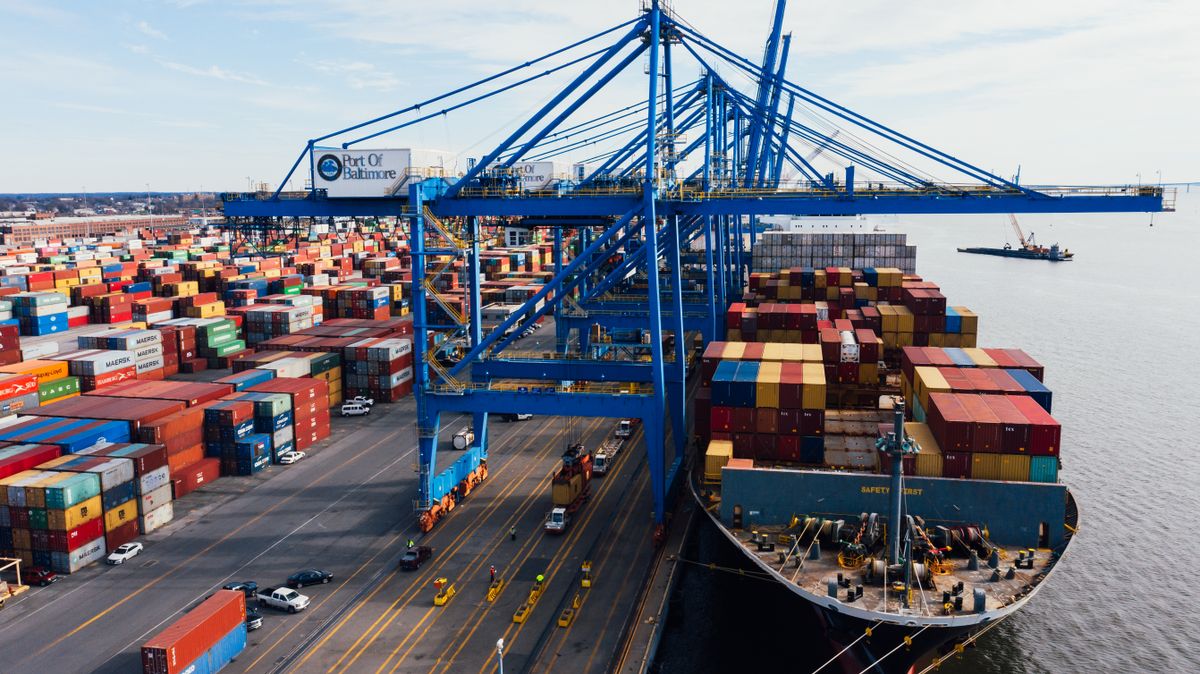
On 1 January 2026 the European Union's Carbon Border Adjustment Mechanism left its transitional, reporting-only phase and entered the definitive regime. The practical shift is from telling Brussels what is embedded in your goods to paying for it. The obligation sits legally on the EU importer, which is why so many Malaysian exporters believe it does not concern them. It concerns them completely, because the importer cannot compute the bill without supplier data, and will price, re-source or simply drop suppliers who cannot provide it.
| Element | Position from 1 January 2026 |
|---|---|
| Covered goods | Iron and steel, aluminium, cement, fertilisers, electricity, hydrogen — plus certain downstream products in those chains |
| Who is liable | The EU importer, which must hold authorised CBAM declarant status to import covered goods |
| De minimis | A mass-based exemption of 50 tonnes per calendar year of covered goods per importer, calculated on net (intrinsic) mass excluding packaging as declared to customs; reported to exempt roughly 90% of importers while retaining the overwhelming majority of embedded emissions |
| Certificates | Importers do not buy certificates during 2026; sales through the EU central platform begin in February 2027, covering 2026 imports |
| Emissions data | Actual, verified installation-level data is preferred; default values apply where data is absent, and defaults are deliberately unfavourable |
| Carbon price already paid | A carbon price actually paid in the country of production can be deducted from the CBAM liability |
What a Malaysian factory is actually asked for
Strip away the acronyms and the request from your European customer reduces to a short, hard list:
- Installation identity. Which physical plant produced the goods, its location and operator — not the trading company on the invoice.
- Production route. The process actually used, because embedded emissions are calculated per route, not per product name.
- Direct emissions from the production process, per tonne of output, for a defined reporting period.
- Indirect emissions from purchased electricity and heat — which in Malaysia means your grid supply, with its own emissions factor, or your own generation.
- Precursors. Emissions embedded in inputs you bought — your own suppliers' data, which is where most first attempts collapse.
- Verification. Numbers a third party can check against records, not a spreadsheet assembled the week the customer asked.
Companies that fail this test rarely fail on ambition. They fail because meter readings, production tonnages and fuel purchase records were never reconciled to the same period and the same boundary. That reconciliation is a bookkeeping problem before it is an engineering problem, and it is solvable in a quarter if someone owns it.
Sustainability reporting: the obligation that arrives before any tax
Malaysia's National Sustainability Reporting Framework adopts the ISSB standards — IFRS S1 and IFRS S2 Climate-related Disclosures — as the national baseline, phased by cohort:
| Group | Who | First financial year |
|---|---|---|
| Group 1 | Main Market listed issuers with market capitalisation of RM2 billion and above | 2025 |
| Group 2 | Other Main Market listed issuers | 2026 |
| Group 3 | ACE Market listed issuers, plus large non-listed companies with consolidated group revenue of RM2 billion and above for two consecutive preceding financial years | 2027 |
Most foreign-owned Malaysian subsidiaries sit outside all three groups on their own numbers. They are pulled in anyway, from two directions: a listed Malaysian customer needs supply-chain emissions data to complete its own disclosure, and a foreign parent subject to reporting rules in its home market needs the Malaysian subsidiary's figures to consolidate. In practice, the first serious request for your emissions data arrives from a customer or a parent, not from a regulator.
What to do in the next twelve months
The planning logic is unusual here, because the compliance cost is uncertain while the subsidy is certain. That argues for acting now on the things that pay regardless of when the tax lands.
- Build the emissions baseline before you are asked. One calendar year, one boundary, meter-level energy data reconciled to production tonnage and to your purchase ledger. This single dataset serves CBAM, customer questionnaires, your parent's consolidation and — eventually — the MMRV submission.
- Check your CBAM exposure honestly. Not "do we export to Europe" but "does any covered good in any tier of our chain reach an EU importer". A component supplier two steps removed from the border still gets the questionnaire.
- Claim the incentives that exist today. The Green Investment Tax Allowance and GITE carry an application window running to the end of 2026 and pay for exactly the assets that lower your future exposure. Manufacturers should read them alongside the Reinvestment Allowance and the automation capital allowance.
- Price your electricity strategically. Green power procurement, rooftop solar and the corporate renewable energy supply arrangements discussed in our note on data-centre power rules change both your tariff and your indirect emissions figure.
- Do not pre-pay for a tax that has no rate. Budget for readiness, not for liability. Revisit the moment the Carbon Tax Bill is tabled with an actual rate, perimeter and commencement date attached.
What would it cost if it lands? A scenario, clearly labelled as one
Because no rate is gazetted, the only honest way to size the exposure is to model it across the range that has been publicly floated and to be explicit that these are scenarios, not forecasts. Take a plant emitting 20,000 tonnes of CO₂e a year in a covered sector:
| Assumed rate (RM/tCO₂e) | Annual cost at 20,000 tCO₂e | Effect of a 20% emissions reduction |
|---|---|---|
| RM15 — the initial figure reported as under consideration in November 2025 | RM300,000 | Saves RM60,000 a year |
| RM35 — low end of published third-party estimates | RM700,000 | Saves RM140,000 a year |
| RM45 — high end of published third-party estimates | RM900,000 | Saves RM180,000 a year |
Three observations follow. First, at the lower end the tax is not, by itself, an investment case for abatement — the electricity saving from the same project is usually larger than the tax saved. Second, the phasing signalled to Parliament means the first year is unlikely to be charged at the headline rate, so first-year cash impact is smaller again. Third, and most importantly, the number that moves is the emissions figure, and it moves your CBAM position, your customer's supply-chain disclosure and your future tax base simultaneously. Reduce the tonnes and every one of those numbers improves; argue about the rate and none of them do.
How this fits a China-to-Malaysia manufacturing move
For Chinese manufacturers relocating capacity to Malaysia — the largest single category of client we work with — carbon is now part of the site-selection arithmetic rather than an afterthought. Three points are specific to this route:
Second, the incentive stack is genuinely more generous than most incoming investors realise, and it is claimed at the point of capital expenditure — meaning the decision has to be made while the plant is being specified, not after commissioning. Third, verified emissions data is becoming a commercial credential in its own right: it is increasingly the difference between being a qualified supplier to a European buyer and being a price-taker on the spot market.
The bottom line
Malaysia's carbon tax is real as policy and unfinished as law: announced for iron, steel and energy, reaffirmed in two budgets, paused for review in April 2026 and still in drafting in June 2026, with no gazetted rate. The Climate Change Bill that must supply its measurement backbone has not passed. Treat any Malaysian carbon tax number you are quoted today as a planning assumption, not a liability.
What is not speculative is the European mechanism that began charging on 1 January 2026, the customer questionnaires already circulating, and the incentive windows that close at the end of this year. Build the data, claim the allowances, and keep the tax modelling on the shelf until a rate exists.
ONEKEY BIZ advises foreign manufacturers on Malaysian incentive applications, manufacturing licences and the compliance calendar that comes with them — including how green and reinvestment allowances interact with the rest of your tax position. Book a free consultation, or read more about our investment tax allowance and incentive application service.
Frequently asked questions
Is my Malaysian company paying carbon tax in 2026?
No. As at August 2026 no carbon tax has been enacted in Malaysia. The tax was announced in the Budget 2025 speech for the iron, steel and energy sectors and reaffirmed in Budget 2026, but the rollout was put under review in April 2026 and the Dewan Rakyat was told on 24 June 2026 that the Carbon Tax Bill remained in its final drafting stage, with the mechanism and revenue projection not yet fixed. The Climate Change Bill that is to supply the measurement, monitoring, reporting and verification backbone has also not passed. Any Malaysian carbon tax figure quoted to you today rests on a rate that has never been gazetted.
We export to Europe but we are not the importer. Does CBAM affect us?
Yes, commercially. The legal obligation sits on the EU importer, which from 1 January 2026 must hold authorised CBAM declarant status and, from February 2027, buy and surrender certificates covering 2026 imports. But the importer cannot compute that liability without installation-level emissions data from the producer. Where data is missing, default values apply and they are deliberately unfavourable. In practice the importer prices that risk into your quotation, requests verified data, or re-sources. Component suppliers two tiers from the border receive the same questionnaires.
Does the 50-tonne de minimis mean small exporters are safe?
Be careful — the threshold is measured on the EU importer, not on you. It exempts an importer whose total annual imports of covered goods stay below 50 tonnes of net mass per calendar year, calculated excluding packaging as declared to customs. It was reported to exempt roughly 90% of importers while still capturing the overwhelming majority of embedded emissions. If you supply several EU customers, some may be under the threshold and some over, and the same product can therefore attract data requests from one buyer and none from another.
What should we do now, before the rate is known?
Build the emissions baseline and claim the incentives, but do not budget a liability. One calendar year of meter-level energy data reconciled to production tonnage and to the purchase ledger, on a single defined boundary, serves CBAM, customer questionnaires, your parent's consolidation and any future MMRV submission. On the incentive side, the Green Investment Tax Allowance and GITE windows run to the end of 2026, and manufacturers should assess them alongside the Reinvestment Allowance and the automation capital allowance. Revisit tax modelling when the Carbon Tax Bill is tabled with a rate, perimeter and commencement date attached.
Does relocating production from China to Malaysia lower our CBAM exposure?
Not by itself. CBAM follows the physical installation and its actual emissions, not the shipping origin. A plant in Malaysia running the same process on grid electricity with a comparable emissions factor produces a comparable embedded-emissions figure. The advantage has to be built — through process choice, power sourcing and verified data — and those decisions are made while the plant is being specified, which is also when the Malaysian capital-expenditure incentives are claimed. Verified emissions data is increasingly a supplier qualification in its own right.
Related services
We handle the process described in this article end-to-end.
- Manufacturing Licence (ICA 1975) ApplicationApply for a MIDA Manufacturing Licence under ICA 1975.
- Exemption from Manufacturing Licence (ICA 1975)Confirmation letter of ML exemption for smaller manufacturers.
- Investment Tax Allowance (ITA) ApplicationApply for the Investment Tax Allowance under Malaysia's New Investment Incentive Framework.
Sources & references
- MIDA — Budget 2025: Govt to introduce carbon tax on iron, steel and energy industries by 2026
- Ministry of Finance Malaysia — Budget documents and speeches
- Ministry of Natural Resources and Environmental Sustainability (NRES)
- MIDA — Incentives for green technology and manufacturing
- MITI — Trade and industry policy portal
This article is general information only, not legal, tax or immigration advice. Policies, thresholds and official fees are set by the relevant Malaysian authorities and may change. Talk to our consultants about your specific situation.