Almost every foreign company that approaches Malaysia's oil and gas sector arrives asking the same question — "how do we get a PETRONAS licence?" — and the question is already wrong. Three completely different instruments hide behind that one phrase. One is a statutory licence issued under the Petroleum Development Act 1974 (Act 144) and the Petroleum Regulations 1974, and operating without it is a criminal offence. One is PETRONAS's own vendor registration, which has no statute behind it at all and is simply a procurement precondition. And one is the Prime Minister's permission under section 6, required before anyone refines petroleum, manufactures petrochemicals, or markets and distributes petroleum products in Malaysia — carrying a fine of up to RM1 million, five years' imprisonment, a further RM100,000 for every day the offence continues, and forfeiture of the plant. Companies routinely apply for the cheap one when they needed the expensive one. This guide separates the three, prices each, and sets out what a foreign vendor actually has to build.
Why the vocabulary matters before the paperwork does
Section 2 of the Petroleum Development Act 1974 vests in PETRONAS the entire ownership of, and the exclusive rights, powers, liberties and privileges of exploring and exploiting, petroleum resources whether onshore or offshore Malaysia. That single vesting is the reason the commercial gatekeeper and the regulatory gatekeeper are the same organisation upstream — and the reason foreign companies keep assuming PETRONAS controls everything downstream too. It does not.
The correct map has three doors, and which one you need depends entirely on what you intend to sell and to whom.
| Instrument | Legal basis | What it permits | Penalty for going without |
|---|---|---|---|
| PETRONAS Licence | Petroleum Regulations 1974, reg. 3 (made under s.7 of Act 144) | Carrying on any business or service relating to upstream exploration, exploitation, winning and obtaining of petroleum — and, in PETRONAS's commercial practice, supplying downstream too | Fine up to RM50,000 or 2 years' imprisonment or both; continuing offence RM1,000 per day (reg. 9) |
| PETRONAS Registration | None — a PETRONAS commercial requirement | Tendering to supply the downstream PETRONAS Group of Companies | No offence — you simply cannot be invited to tender |
| Section 6 permission | Act 144, s.6(1) and s.6(3); applications routed under reg. 3A | Processing or refining petroleum, manufacturing petrochemicals from petroleum, or marketing and distributing petroleum and petrochemical products | Fine up to RM1,000,000 or 5 years' imprisonment or both; RM100,000 per day continuing; forfeiture of machinery, plant, buildings and product |
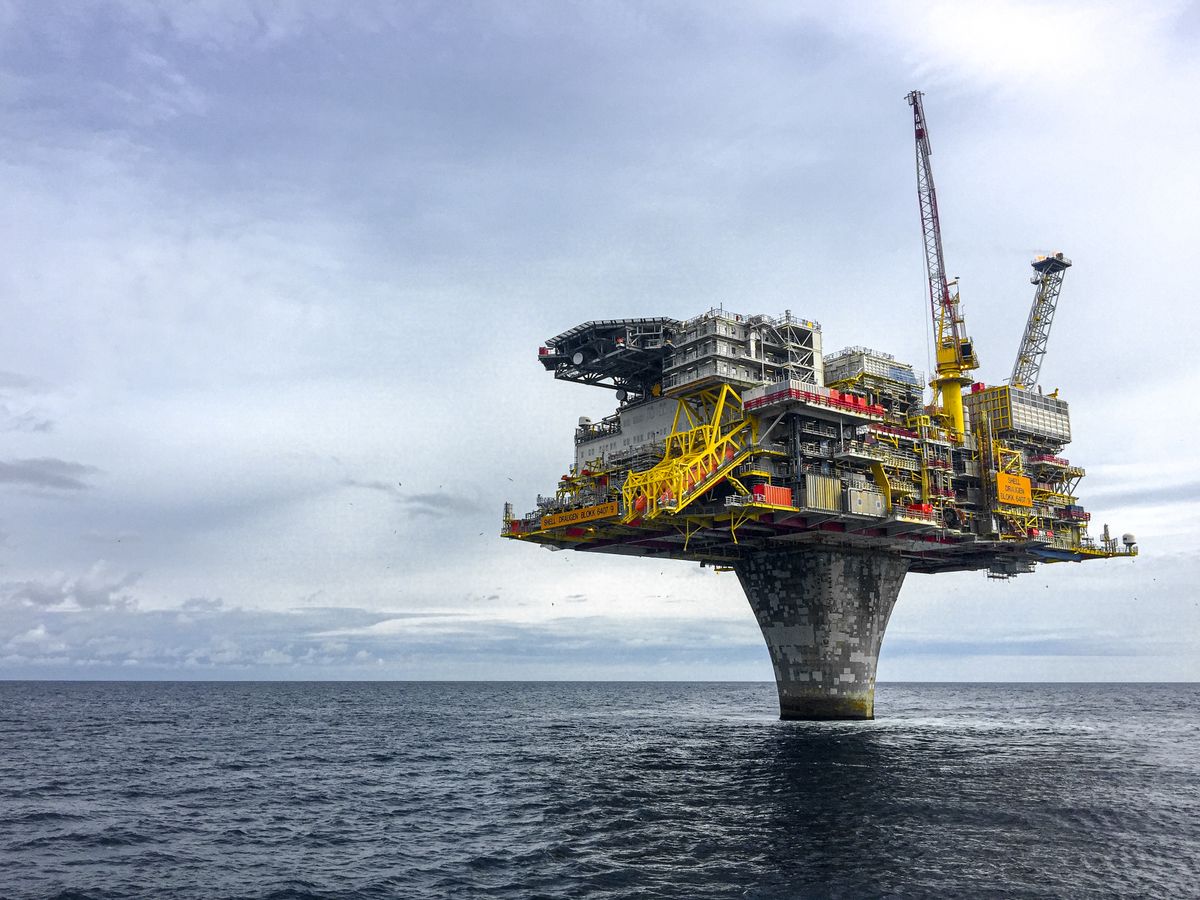
Instrument 1 — the statutory upstream Licence
Regulation 3 of the Petroleum Regulations 1974 requires an application to the President of PETRONAS for a licence to commence or continue any business or service, onshore or offshore, relating to the exploration, exploitation, winning and obtaining of petroleum. The regulation then spells out the supply side in unusual detail, and the breadth is what catches vendors out. It expressly covers survey and exploration services; all engineering, technical and consultancy services involved in exploration, drilling and production of crude oil and natural gas; all engineering, construction and maintenance works connected with upstream activities; rigs and drilling services; supplies of exploration, drilling and production materials, equipment, platforms, derricks, tools and installations, pipe and pipe-laying services, barges and tankers; and the supply of general services connected with upstream operations.
Read that list slowly. A Chinese fabricator supplying structural steel to a platform yard, a survey firm flying drones over a pipeline right-of-way, an engineering consultancy doing hook-up drawings, a manpower supplier providing scaffolders offshore — all of them are inside regulation 3. "We only supply equipment, we are not an oil company" is not a defence.
Under regulation 5, PETRONAS processes the application and forwards it to the Prime Minister, who rejects or approves it. In practice the applicant experiences this as a PETRONAS decision delivered through the PETRONAS Licensing Management System (PLMS), but the approving authority in the regulation is the Prime Minister. Regulation 9 sets the price of getting it wrong: commencing or continuing a regulation 3 business without a licence, or breaching a licence condition, is an offence carrying a fine of up to RM50,000 or imprisonment of up to two years or both, plus RM1,000 for each further day.
Instrument 2 — Registration, which is not law at all
PETRONAS Registration is a different animal. It is required by PETRONAS before an entity may participate in tenders to supply products or services to the downstream PETRONAS Group of Companies — PETRONAS Chemicals Group, PETRONAS Gas Berhad, PETRONAS Dagangan Berhad and their peers. Nothing in Act 144 compels it. It exists because the buyer says so.
Two practical consequences follow. First, there is no licence fee for Registration — the fee schedule attaches to the Licence sector only. Second, and more importantly, Registration confers nothing outside the PETRONAS group. A vendor that only ever sells to a private downstream buyer with no PETRONAS shareholding needs neither Registration nor a regulation 3 licence — but may still need section 6 permission, depending on what it does with the product.
A valid Licence, by contrast, lets a vendor supply both the upstream sector (PETRONAS Group companies and Petroleum Arrangement Contractors, or PACs) and the downstream PETRONAS Group. If you can qualify for a Licence, you do not separately need Registration.
Instrument 3 — the Prime Minister's section 6 permission
Section 6(1) of Act 144 provides that, notwithstanding any other written law, no business of processing or refining petroleum or manufacturing petrochemical products from petroleum may be carried out by any person other than PETRONAS unless permission is given by the Prime Minister. Section 6(3) extends the same rule to any business of marketing or distributing petroleum or petrochemical products. Section 6(4) allows the Prime Minister to impose whatever terms and conditions he thinks fit.
Regulation 3A tells you where the paperwork goes, and the split is a useful signal of how the Malaysian state thinks about the two activities:
| Activity | Statutory hook | Application filed with | Fee basis |
|---|---|---|---|
| Processing or refining petroleum; manufacturing petrochemical products from petroleum | s.6(1), reg. 3A(1) | Secretary-General, Ministry of International Trade and Industry (MITI) | By shareholders' funds: RM50 / RM250 / RM500 / RM1,000 |
| Marketing or distributing petroleum or petrochemical products | s.6(3), reg. 3A(2) | Secretary-General, the ministry responsible for domestic trade (now KPDN) | RM25 per year |
| Upstream business or service | reg. 3 | President of PETRONAS (via PLMS) | By paid-up capital: RM50 / RM250 / RM500 / RM1,000 per year |
Note how small the fees are and how large the penalties are. The fee is not the barrier. The conditions attached under section 6(4) and regulation 5(2) are — and they can reach royalties and levies, work and investment programmes, method of working, inspection of worksite and plant, employment and training, volume of production, quality, fixing of prices, distribution and marketing including the appointment of retailers, export, purchase of product locally or from overseas, an option to purchase petroleum, and a right of pre-emption. A section 6 permission is not a certificate; it is a negotiated licence to operate inside a policy.

What it takes to hold a Licence or Registration
PETRONAS publishes General Guidelines for Licence and Registration; the current version took effect in April 2026. Four general requirements apply to every applicant.
| Requirement | Detail |
|---|---|
| Locally incorporated | Registered with SSM as a Sdn Bhd or Berhad; or as a sole proprietorship or partnership (ROB, West Malaysia only); or registered with the relevant professional body (e.g. Board of Land Surveyors, Board of Valuers, Board of Architects) |
| Minimum paid-up capital | RM100,000 for the Licence sector; RM10,000 for the Registration sector. For professional bodies, read as capital or total value of contribution |
| Positive net worth | The vendor's latest net worth must be positive |
| At least one approved SWEC | A Licence or Registration is only valid and effective if the vendor holds at least one approved Standardised Work and Equipment Category |
The administrative rhythm matters as much as the thresholds. Validity is three years. The average processing time is 10 working days from a complete submission. Renewal can be filed in PLMS from four months before expiry. Miss it badly enough and the system does the deciding for you: a Licence or Registration expired for more than one year is automatically cancelled, and a SWEC expired for more than three months is automatically cancelled — after which you are back to a new application, not a renewal.
The Licence fee is charged on the Licence sector only, and scales with paid-up capital: RM250 for RM100,000–RM1,000,000, RM500 above RM1 million to RM5 million, and RM1,000 above RM5 million. It is payable within one month of the email notification, by FPX online payment only, and is non-refundable. PLMS also requires the vendor to declare its beneficial ownership information — which should be read alongside the beneficial ownership regime you already report to SSM, not as a separate universe.
SWEC, and the Bumiputera arithmetic that decides your shareholding
Standardised Work and Equipment Categories are the product and service categories that define what you may actually bid for. Each SWEC code ends in "P" for product or "S" for service — where a supply involves both, it is categorised as a service. Each is classified as General (less complex, lower investment, readily available) or Strategic (high complexity, high business impact, high investment), and Strategic SWECs normally carry a Minimum Technical Requirement (MTR).
Here is the part that quietly determines your corporate structure. Each SWEC carries a minimum Bumiputera requirement set at 100%, 51%, 30% or 0%, and the requirement is tested at four levels simultaneously — equity, board of directors, management and employment.
| SWEC minimum | Equity (Sdn Bhd / Berhad private / ROB / PB) | Board | Management | Employment |
|---|---|---|---|---|
| 100% | 100% | 75% | 75% | 51% |
| 51% | 51% (35% for a public-listed Berhad; 35% for a Sdn Bhd at least 51% owned by a listed Berhad) | 51% | 51% | 51% |
| 30% | 30% (17.85% for a listed Berhad at least 51% owned by another listed Berhad) | 30% | 30% | 30% |
| 0% | 0% | 0% | 0% | 0% |
Two things follow, and they are the same two things that govern logistics licensing and government procurement registration. First, your shareholding is an output of the SWEC list, not an input: choose the codes you intend to bid for before you fix the cap table, because a 51% SWEC will not accept a 100% foreign-owned vendor no matter how good the technical file is. Second, equity alone is never enough — a company that sells 51% to a Bumiputera partner but keeps an all-foreign board and management still fails, because the test runs at four levels.
And there are SWECs with a 0% requirement. Mapping which of those overlap with your capability is the single highest-value hour of work at the start of a Malaysian oil and gas entry plan.
The three routes for a foreign company
The General Guidelines set out exactly three ways for a foreign company to be Licensed or Registered, and each has a different centre of gravity.
Appoint a local vendor as Agent. The Agent is the licence holder and your local representative and service provider. PETRONAS encourages foreign companies to pick an Agent from among existing licensed or registered vendors. The mechanics are specific: the minimum duration of an agency appointment is three years, longer is expressly encouraged, and the appointment letter must be renewed three months before expiry or the SWEC validity lapses. A Principal may appoint one Agent or several, exclusively or non-exclusively, and a vendor may act as Agent for more than one Principal. This route is the fastest — and it puts the market access in someone else's name.
Open a local branch. The branch must comply with the General Requirements and apply for the Licence or Registration itself. Read our guide to branch registration in Malaysia before choosing this route; a branch is not a separate legal person and the tax and liability consequences differ materially from a subsidiary.
Form a joint venture with a local vendor or individual. The JV company complies with the General Requirements and applies in its own name. This is the only one of the three routes that can satisfy a 51% or 30% Bumiputera SWEC while leaving you inside the licence holder — and it is the route that most needs a properly drafted constitution rather than a side agreement. Our guide to joint ventures, constitutions and shareholders' agreements explains why the protections have to live in the constitution.
Note what is absent from all three: nominee arrangements. A licence obtained on a shareholding that does not reflect economic reality fails on three fronts at once — the SWEC condition is not actually met, the side agreement may be unenforceable, and the beneficial ownership declaration made in PLMS and to SSM becomes false. Regulation 9 and the licence conditions do the rest.
Sarawak is a second gatekeeper, and it is not optional
A federal instrument is not the whole map in East Malaysia. Following amendment of the state's Distribution of Gas Ordinance 2016, Petroleum Sarawak Berhad (Petros) was appointed the sole gas aggregator for Sarawak with effect from 1 February 2024, procuring natural gas produced in Sarawak from upstream producers for distribution, supply and sale to downstream buyers in the state. Arrangements agreed between the Prime Minister and the Sarawak Premier in January 2025 recognised Petros as the state's gas aggregator excluding LNG, while confirming that PETRONAS and its subsidiaries are not required to obtain a state licence or comply with additional procedures beyond those in Act 144.
For a foreign investor the practical reading is simple: if your Malaysian business touches gas distribution, supply or sale in Sarawak, a federal permission is a necessary but not sufficient condition, and the state instrument has to be mapped separately. The same principle runs through immigration and several licensing regimes in Sabah and Sarawak — see our guide to doing business in Sabah and Sarawak.
Where foreign vendors actually lose the year
After running enough of these files, the failure modes repeat.
Applying for the wrong instrument. The blending plant that needed section 6 and applied for a regulation 3 licence. The trading company that needed neither and built a Sdn Bhd it did not use. Diagnose the activity against sections 2, 6(1) and 6(3) and regulation 3 first; the form follows.
Fixing the cap table before choosing SWECs. Capital is easy to raise and painful to unwind. Choose the codes, read their Bumiputera minimums and MTRs, and only then decide whether the vehicle is 100% foreign-owned, a JV, or an agency relationship.
Under-capitalising the vehicle. RM100,000 paid-up is the floor for the Licence sector, not a target. Set it against the working capital the tender pipeline actually demands, and against the paid-up thresholds that other regimes impose on foreign-owned companies — our guide to foreign equity and paid-up capital explains why sizing capital once is cheaper than raising it three times.
Letting an agency letter lapse. Three months before expiry is the deadline, not a suggestion, and a lapsed SWEC that runs three months past expiry is cancelled automatically.
Treating certificates as a formality. Required certifications must be valid throughout the validity period, not merely at application. Qualification evidence means the certificate, diploma or degree — a CV will be rejected.
Ignoring the rest of the stack. A vendor with a manufacturing mode of operation must also produce a MIDA manufacturing licence (or MIDA exemption letter) and a local authority business licence, plus factory layout and process flow. That is a separate regulatory project with its own timeline — see our guides to the MIDA manufacturing licence under the ICA 1975 and to setting up a factory end to end.
Deciding whether to enter at all
Malaysia's oil and gas supply chain is genuinely open to foreign capability, but it is open on terms. The upstream statutory licence is cheap and fast to hold, and expensive to hold wrongly. Registration costs nothing and confers access to exactly one buyer group. Section 6 permission is the heaviest instrument in the framework, and the one most likely to be missed by companies whose plan looks like "manufacturing" or "trading" on the business plan and like "refining" or "distribution" in the statute.
The honest arithmetic for most new entrants is this: if your capability maps to 0% Bumiputera SWECs, a wholly-owned Sdn Bhd with RM100,000 paid-up and a well-built technical file is a short and inexpensive path. If it maps to 51% codes, you are choosing between a real joint venture and an agency relationship, and the question is not which is cheaper but which leaves the market access in a name you can still control in year five. If your plan touches refining, blending, petrochemical manufacture, or fuel and product distribution, the licence conversation starts with a ministry and the Prime Minister — and it should start eighteen months before you want to sell anything.
ONEKEY BIZ helps foreign investors map the activity to the right instrument before any money is spent, structure the Malaysian vehicle for the SWECs that actually matter, and build the incorporation, capitalisation and licensing file end to end. If you are weighing an entry into Malaysia's oil and gas supply chain, talk to us — or start with our manufacturing licence service if your plan involves processing or production on Malaysian soil.
Frequently asked questions
Do we need a PETRONAS licence if we only supply equipment and are not an oil company?
Very likely yes. Regulation 3 of the Petroleum Regulations 1974 covers not only exploration and production but expressly the supply of equipment, facilities and services required in connection with it — including survey and exploration services, all engineering, technical and consultancy services in exploration, drilling and production, all engineering, construction and maintenance works connected with upstream activities, rigs and drilling services, supplies of materials, equipment, platforms, derricks, tools and installations, pipe and pipe-laying services, barges and tankers, and general services connected with upstream operations. A fabricator, a survey firm, an engineering consultancy or an offshore manpower supplier all sit inside regulation 3. Operating without the licence is an offence under regulation 9 carrying a fine of up to RM50,000 or two years' imprisonment or both, plus RM1,000 for each further day.
We want to blend lubricants or trade fuel in Malaysia. Is that a PETRONAS licence?
No — and this is the most expensive misreading in the sector. Blending base oil into finished lubricants is manufacturing a product from petroleum, and selling fuel or petrochemical products into the market is marketing and distribution. Both fall under section 6 of the Petroleum Development Act 1974, which requires the Prime Minister's permission. Under regulation 3A, applications for processing, refining or petrochemical manufacture go to the Secretary-General of MITI, and applications for marketing or distribution go to the Secretary-General of the ministry responsible for domestic trade. Acting without permission carries a fine of up to RM1 million or five years' imprisonment or both, a further RM100,000 for each day the offence continues, and forfeiture of machinery, plant, buildings and product.
Can a 100% foreign-owned Sdn Bhd hold a PETRONAS Licence?
It depends entirely on the SWEC codes you apply for. The general requirements — locally incorporated, minimum paid-up capital of RM100,000 for the Licence sector, positive net worth, and at least one approved SWEC — say nothing about foreign ownership. The constraint sits in the SWEC itself: each carries a minimum Bumiputera requirement of 100%, 51%, 30% or 0%, tested simultaneously at four levels (equity, board of directors, management and employment). Where the codes you need are 0%, a wholly foreign-owned Sdn Bhd is workable. Where they are 51%, you are choosing between a genuine joint venture and an agency relationship. Choose the codes before you fix the cap table — the shareholding is an output of the SWEC list, not a free choice.
How long does a PETRONAS Licence last, and when must we renew?
Validity is three years, and average processing time for a complete application is about 10 working days. Renewal can be submitted in PLMS from four months before expiry. Two automatic cancellations catch the unwary: a Licence or Registration expired for more than one year is cancelled by the system for non-renewal, and a SWEC expired for more than three months is cancelled — after which you must file a new application rather than a renewal. If you operate through an appointed Agent, note separately that the agency appointment letter must be renewed three months before its expiry to keep the SWEC valid, and the minimum appointment duration is three years.
Related services
We handle the process described in this article end-to-end.
- Manufacturing Licence (ICA 1975) ApplicationApply for a MIDA Manufacturing Licence under ICA 1975.
- Exemption from Manufacturing Licence (ICA 1975)Confirmation letter of ML exemption for smaller manufacturers.
- Investment Tax Allowance (ITA) ApplicationApply for the Investment Tax Allowance under Malaysia's New Investment Incentive Framework.
Sources & references
- Attorney General's Chambers Malaysia — Petroleum Development Act 1974 (Act 144)
- Attorney General's Chambers Malaysia — Federal Legislation Portal
- Ministry of Investment, Trade and Industry (MITI)
- Ministry of Domestic Trade and Cost of Living (KPDN)
- Malaysian Investment Development Authority (MIDA)
- Companies Commission of Malaysia (SSM)
This article is general information only, not legal, tax or immigration advice. Policies, thresholds and official fees are set by the relevant Malaysian authorities and may change. Talk to our consultants about your specific situation.