Most foreign investors approach Malaysian logistics the way they approach any other sector: incorporate a wholly-owned Sdn Bhd, rent a warehouse, buy some lorries, and start moving goods. Then they discover that the customs clearance licence they need requires 51% Bumiputera ownership, that carrying third-party freight by road caps foreign equity at 49%, that hauling only their own goods carries no cap at all, and that there is a MIDA status which unlocks 100% foreign ownership across the whole chain — but only for operators of a certain size. In Malaysian logistics, the licence does not follow the shareholding. The shareholding has to follow the licence. This guide maps every licence a logistics operation may need, who issues it, what equity and capital each demands, and the three structures that actually work — including the new rule for lorries under 7.5 tonnes that took effect on 1 April 2026.
Logistics is not one licence — it is a stack
"Logistics company" is a commercial description, not a regulatory category. Malaysia licenses each activity separately, through different regulators, under different statutes, with different foreign-equity rules. A single warehouse-to-door operation can easily touch four of them.
| Activity | Licence & legal basis | Regulator | Foreign equity |
|---|---|---|---|
| Customs clearance / freight forwarding | Customs agent approval, s.90 Customs Act 1967 | RMCD (Customs) | Max 49% — 51% Bumiputera required, unless IILS status |
| Shipping agency | Agent approval, s.90 Customs Act 1967 | RMCD | 30% Bumiputera participation required |
| Road haulage for third parties | Carrier Licence A, Land Public Transport Act 2010 | APAD | Max 49% (51% Malaysian incl. 30% Bumiputera) |
| Road haulage of own goods | Carrier Licence C, Land Public Transport Act 2010 | APAD | Up to 100% |
| Bonded storage of dutiable goods | Warehouse licence, s.65 Customs Act 1967 | RMCD | No specific equity cap |
| Courier / parcel delivery | Non-universal service licence, Postal Services Act 2012 | MCMC | Currently up to 100% |
| Integrated end-to-end logistics | IILS status (a status, not a licence) | MIDA | 100% permitted |
Customs agent and freight forwarding: where the 51% rule comes from
Any company clearing goods through Malaysian customs on behalf of others — the core of freight forwarding — needs approval as a customs agent under section 90 of the Customs Act 1967, granted by the Royal Malaysian Customs Department. Section 90 also covers shipping and forwarding agents.
The equity conditions attached to that approval are the single most consequential fact in Malaysian logistics for a foreign investor, and they are historical in origin:
| Category | Bumiputera participation required | Applies to |
|---|---|---|
| Forwarding agent registered after 1990 | At least 51% — of share capital, management and employees | Every new applicant today |
| Forwarding agent registered 1976–1990 | 30% | Legacy licence holders only |
| Shipping agent | At least 30% — share capital, management and employees | New applicants |
| Minimum paid-up capital | Generally not less than RM100,000 | Customs agent applicants |
| Practical consequence | A new foreign investor is capped at 49% of a freight forwarding company | Unless IILS status is obtained first |
Note the breadth of the 51% test: it is not only shareholding. It reaches management and the employee base. A structure that parks 51% of shares with a nominee while every manager is a foreign secondee does not satisfy the condition, and dressing it up with side agreements creates a licence that can be revoked and a shareholding that is unenforceable. This is the point at which a serious operator either takes a genuine local partner or goes down the IILS route.
IILS status: MIDA's key to 100% foreign ownership
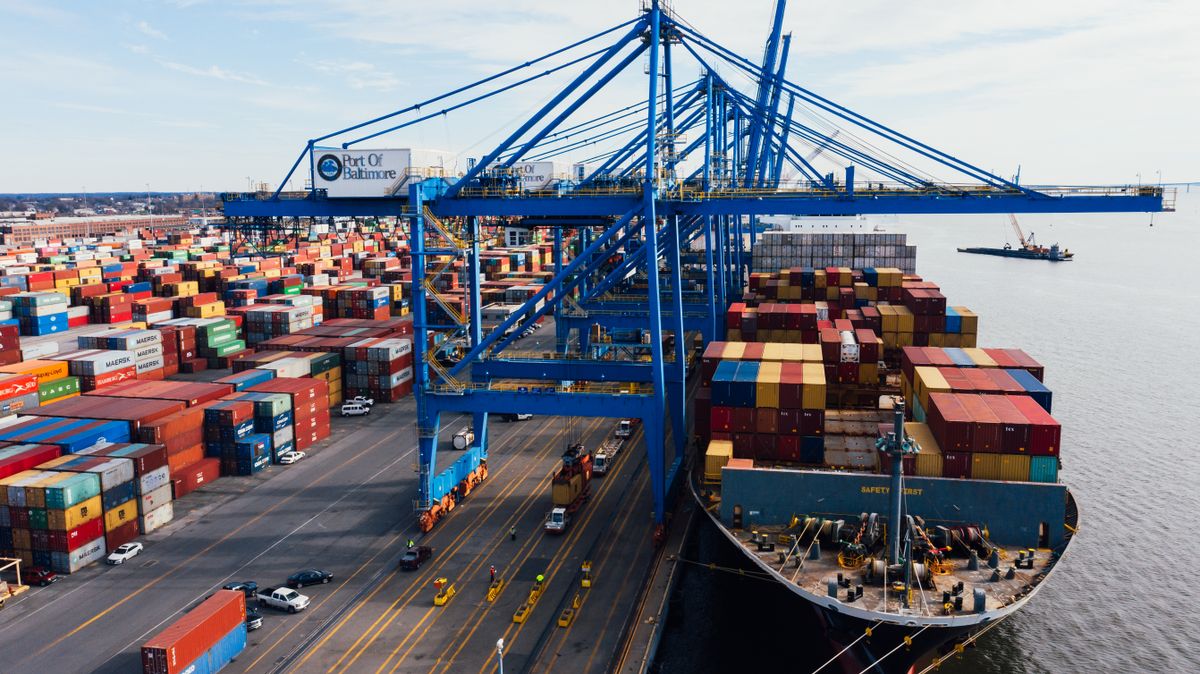
International Integrated Logistics Services (IILS) status, granted by MIDA, is the mechanism Malaysia uses to attract genuine regional logistics operators without opening the whole sector. A company approved with IILS status is permitted 100% foreign equity, and on the strength of that approval RMCD issues the freight forwarding / customs agent licence that would otherwise be blocked by the 51% rule.
The trade-off is scale. IILS is designed for integrated operators, not for a two-person forwarding desk:
| IILS criterion | Requirement |
|---|---|
| Scope of activity | "3 + 1" — warehousing, transportation and freight forwarding, plus at least one value-added service (distribution, supply chain management or similar) |
| Fleet | Manage a minimum of 20 commercial vehicles |
| Warehouse space | At least 5,000 m² |
| Employment | Workforce predominantly Malaysian citizens, with preference to local professionals |
| Positioning | Use Malaysia as a regional or global logistics hub, with substantial ICT infrastructure |
| Equity | 100% foreign ownership permitted |
| Downstream effect | Approved applicants are then granted the freight forwarding / customs agent licence by RMCD |
Read those thresholds as a filter, not a wish list. Twenty commercial vehicles and 5,000 m² of warehouse are a real balance sheet — several million ringgit of committed capacity before revenue. For a Chinese manufacturer that already ships container volumes through Port Klang and wants to control its own clearance and distribution, IILS is often the correct answer. For a trading company that clears a dozen shipments a month, it is not; that company should either appoint a licensed forwarder or take a 49% stake in one.
Road transport: Carrier Licence A versus Carrier Licence C
Operational licensing of goods vehicles in Peninsular Malaysia runs through the Land Public Transport Act 2010 (Act 715), administered by APAD. The distinction that decides your cap table is simple: whose goods are you carrying?
| Carrier Licence A | Carrier Licence C | |
|---|---|---|
| Purpose | Carrying third-party goods for hire or reward | Carrying your own goods only |
| Foreign equity | Maximum 49% — at least 51% Malaysian, including 30% Bumiputera | Up to 100% foreign |
| Minimum paid-up capital | RM250,000 (non-container); RM500,000 (container carrier) | No capital requirement |
| Who it suits | Third-party hauliers, 3PL providers, container transporters | Manufacturers, distributors and retailers moving their own stock |
| Regulator | APAD, under Act 715 | APAD, under Act 715 |
This single distinction resolves most foreign investors' problem before it arises. A wholly foreign-owned manufacturer that wants a fleet delivering its own finished goods to customers needs Carrier Licence C, keeps 100% of its company, and never touches the 49% cap. The cap only bites when you decide to sell transport as a service to others.

Warehousing: ordinary, public bonded, private bonded
Storage divides by what you store and where duty sits. Malaysia recognises three warehouse categories:
| Type | What it is | Licensed by |
|---|---|---|
| Ordinary warehouse | General storage of duty-paid or non-dutiable goods | Local authority (premises licence) |
| Public bonded warehouse | Storage of dutiable goods with duty suspended, for multiple depositors | RMCD, s.65 Customs Act 1967 |
| Private bonded warehouse | Duty-suspended storage for the licensee's own goods | RMCD, s.65 Customs Act 1967 |
| Prerequisites | DOE approval where hazardous goods are stored; Bomba (Fire and Rescue) approval; sewerage and water authority sign-offs; Certificate of Completion and Compliance (CCC) from the local authority | |
| Where to apply | State Director of Customs for the state in which the warehouse is located, via the nearest customs office | |
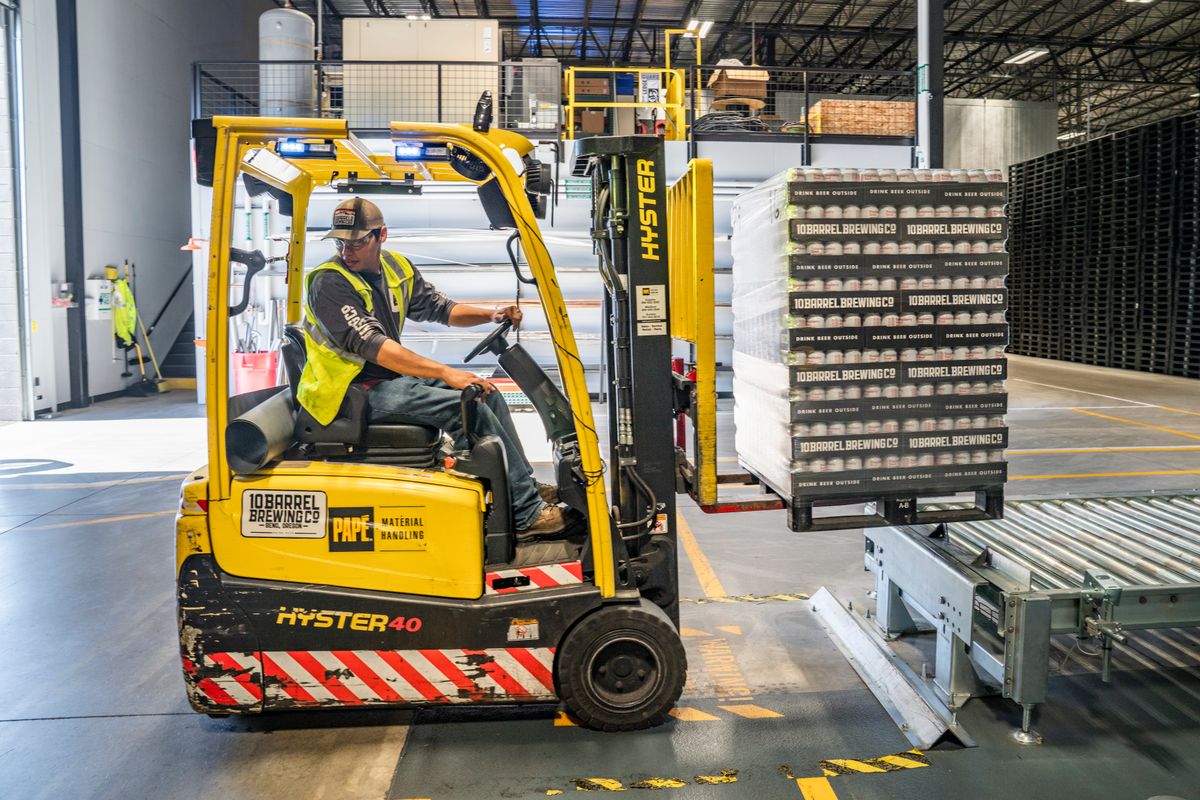
Bonded status is a cash-flow instrument, not a tax exemption: duty and sales tax are suspended while goods sit in the warehouse and become payable when the goods enter the principal customs area. If your goods are ultimately re-exported, the duty never crystallises. If you are manufacturing rather than storing, the relevant regimes are the Licensed Manufacturing Warehouse (LMW) — whose annual licence fee stands at RM2,400 in 2026 — or a free zone (FIZ/FCZ), both of which we cover separately.
One obligation now sits on top of all three warehouse types, and it comes from outside Malaysia. Since 1 June 2026, GACC Decree 280 has made overseas cold storage facilities handling terrestrial animal and aquatic products registrable in their own right before the goods they hold may enter China. A cold chain operator in Port Klang or Pasir Gudang serving China-bound seafood or meat is therefore no longer merely a service provider to the exporter — it is a registrant, and an unregistered storage node is a defect in the exporter's consignment. Operators and exporters alike should read our guide to GACC Decree 280 and CIFER registration for Malaysian food exporters.
Courier and last-mile: the MCMC licence
Parcel delivery is not transport law — it is postal law. Courier services fall under the Postal Services Act 2012 and are licensed by the MCMC as non-universal service licences, historically graded by geographic scope:
| Licence class | Scope | Minimum paid-up capital |
|---|---|---|
| Class A | International inbound and outbound, plus domestic | RM1,000,000 |
| Class B | International inbound plus domestic | RM500,000 |
| Class C | Intra-state domestic only | RM100,000 |
| Foreign equity | Courier services currently permit up to 100% foreign participation | |
Tax and reporting once you are operating
Two compliance items apply across every structure above. First, service tax on logistics services runs at 6% — one of the reduced-rate categories under the SST expansion, against the 8% that applies to most taxable services — with the general registration threshold of RM500,000 in annual taxable turnover. Second, e-invoicing through LHDN's MyInvois applies on the standard phased timetable, and logistics operators feel it acutely because of transaction volume: hundreds of small consignment invoices a day is a systems problem, not a bookkeeping one. Operators with significant import-export volume should also look at AEO (Authorised Economic Operator) accreditation with RMCD for green-lane clearance.
Three structures that actually work
| Own-use model | Joint-venture model | IILS model | |
|---|---|---|---|
| What you do | Move only your own goods; appoint a licensed forwarder for clearance | Take 49% of a licensed forwarder / haulier with a genuine local partner | Build an integrated operation and apply to MIDA for IILS status |
| Foreign ownership | 100% | 49% | 100% |
| Licences needed | Carrier Licence C; warehouse licence if storing | s.90 customs agent; Carrier Licence A; warehouse | IILS status → s.90 licence; Carrier Licence A via the licensed entity; warehouse |
| Capital commitment | Low — no statutory minimum for Licence C | Moderate — RM250,000–500,000 paid-up in the JV | High — 20 vehicles and 5,000 m² of warehouse |
| Best for | Manufacturers and traders distributing their own stock | Mid-size forwarders wanting a Malaysian licence without IILS scale | Regional 3PLs and manufacturers running their own end-to-end chain |
| Main risk | Dependence on a third-party forwarder's service levels | Partner alignment; the 51% test reaches management and staffing too | Meeting and sustaining the scale conditions |
Sequence and timeline
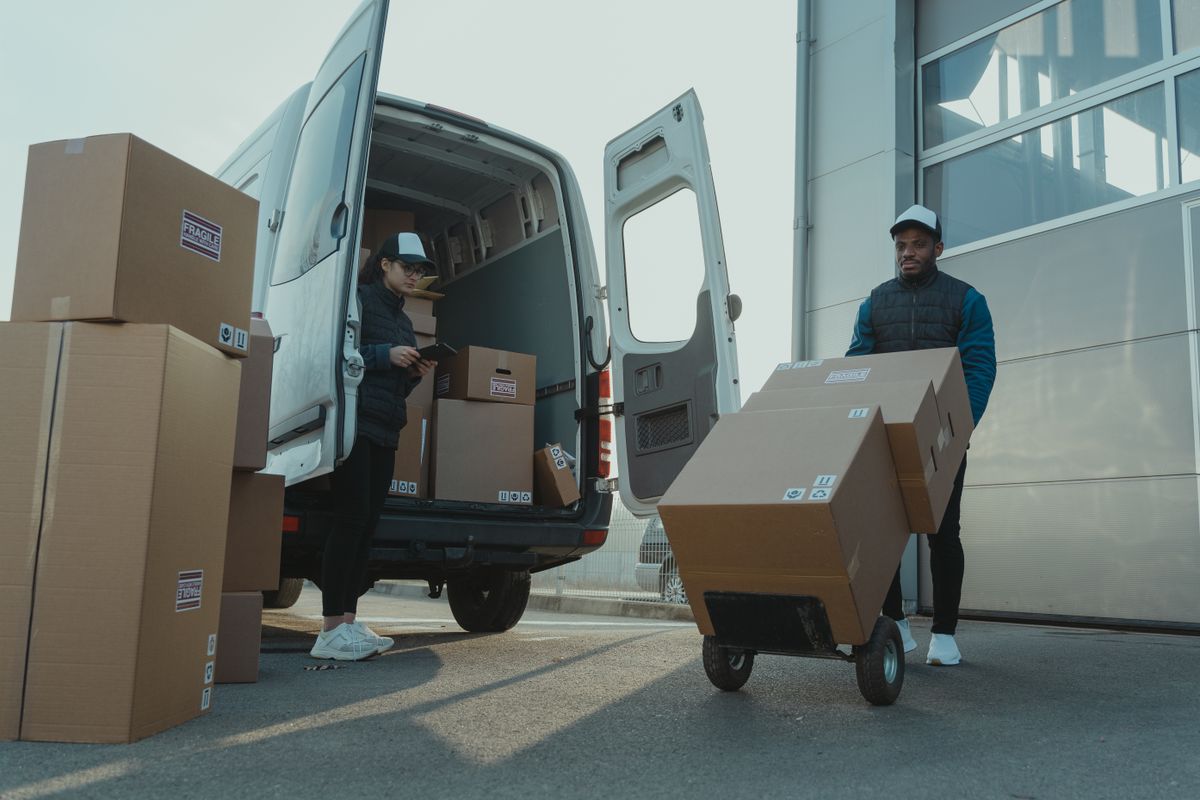
Work backwards from the licence, not forwards from the company. Decide first whether you will carry third-party freight and whether you will clear customs yourself — those two answers alone determine whether you can hold 100%, must sit at 49%, or need to build to IILS scale. Then, and only then, incorporate with the right cap table and paid-up capital, since amending share structure after a licence application has started means going back to the beginning.
From there the order is: secure premises with a valid CCC and the DOE and Bomba approvals your goods require; apply for the warehouse licence to the State Director of Customs; apply to APAD for Carrier Licence A or C alongside vehicle registration and GDL driver licensing; and lodge the section 90 customs agent application with RMCD — or, on the IILS path, obtain MIDA approval first and present it to RMCD. Realistically, an own-use structure can be operating within two to three months; a joint-venture forwarding operation takes four to six once partner negotiation is included; an IILS application should be planned across six to twelve months, because the scale conditions have to be demonstrated, not merely promised.
The framing to keep in mind is the one this guide opened with: in Malaysian logistics, ownership follows the licence. Foreign investors who accept that early build clean structures that survive audit; those who try to make the licence follow the ownership end up with nominee arrangements that are expensive to unwind. For the broader equity rules that sit behind these thresholds, see our guide to foreign equity and paid-up capital in Malaysia; if you will also be selling or distributing goods rather than only moving them, the KPDN WRT distributive trade licence is a separate requirement you should check at the same time.
If you are planning a Malaysian logistics, warehousing or distribution operation and want the licence map and shareholding structure worked out before incorporation, talk to our team or see our equity structure design service. Deciding this once, at the start, is far cheaper than restructuring around a licence you have already been refused.
Frequently asked questions
Can a 100% foreign-owned company do freight forwarding and customs clearance in Malaysia?
Not on the ordinary route. Clearing goods for others requires customs agent approval under section 90 of the Customs Act 1967, and for forwarding agents registered after 1990 that approval requires at least 51% Bumiputera participation — in share capital, management and employees, with paid-up capital generally not below RM100,000. The one route to 100% foreign ownership is IILS status from MIDA: approved companies are permitted full foreign equity and are then granted the freight forwarding / customs agent licence by RMCD. Otherwise a foreign investor is capped at 49% of a licensed forwarder.
What does IILS status actually require?
Scale, and a genuinely integrated operation. MIDA looks for "3 + 1" activities — warehousing, transportation and freight forwarding, plus at least one value-added service such as distribution or supply chain management — together with a minimum of 20 commercial vehicles, at least 5,000 m² of warehouse space, a workforce that is predominantly Malaysian, substantial ICT infrastructure, and the use of Malaysia as a regional or global hub. Those thresholds are a filter: they represent several million ringgit of committed capacity before revenue, which is why IILS suits regional 3PLs and large manufacturers rather than small forwarding desks.
We only want to deliver our own products. Do we still need a transport licence?
Yes, but the easy one. Carrying your own goods requires Carrier Licence C under the Land Public Transport Act 2010, which has no minimum paid-up capital and permits up to 100% foreign ownership. The 49% cap and the RM250,000 (non-container) / RM500,000 (container) capital requirements attach to Carrier Licence A, which is needed only if you carry third-party goods for hire or reward. Since 1 April 2026 the same principle applies to goods vehicles and pickups at or below 7,500 kg: own goods need no APAD operating permit, while carrying for hire requires an APAD A licence plus fleet monitoring such as GPS tracking.
What is the difference between a bonded warehouse and a free zone or LMW?
A bonded warehouse under section 65 of the Customs Act 1967 is for storage with duty suspended — public bonded serves multiple depositors, private bonded serves the licensee's own goods, and duty crystallises only when goods enter the principal customs area. A Licensed Manufacturing Warehouse (LMW) and a free zone (FIZ/FCZ) are for manufacturing under duty suspension, with their own export conditions. Bonded status is a cash-flow instrument, not an exemption. Note that ordinary warehouses are licensed by the local authority, while public and private bonded warehouses are licensed by RMCD — and DOE approval (for hazardous goods), Bomba approval and a Certificate of Completion and Compliance all come first.
Is it true that foreign ownership of courier companies will be capped at 49%?
Not today. Courier services under the Postal Services Act 2012 are licensed by MCMC as non-universal service licences, historically graded Class A (international inbound and outbound plus domestic, RM1 million paid-up), Class B (international inbound plus domestic, RM500,000) and Class C (intra-state domestic, RM100,000), and foreign participation of up to 100% is currently permitted. MCMC has consulted on replacing these with N-Courier, U-Courier and I-Courier classes — under which N-Courier applicants would need RM50 million paid-up capital and would have to pare foreign shareholding to 49%. That framework has been consulted on, not enacted. The A/B/C regime remains operative, but anyone building a national last-mile network should price the risk that a cap arrives later.
Related services
We handle the process described in this article end-to-end.
- Sdn. Bhd. Company Incorporation in MalaysiaRegister a private limited company (Sdn. Bhd.) with SSM end-to-end.
- Annual Return Filing (Section 68) for Sdn. Bhd.Lodge your company’s yearly annual return with SSM on time.
- Appointment & Resignation of DirectorsUpdate your board — appoint or resign directors (Section 58/201).
Sources & references
- Customs Act 1967 — Laws of Malaysia (InvestMalaysia, Government of Malaysia)
- International Integrated Logistics Services (IILS) Status — Malaysian Investment Development Authority (MIDA)
- Commercial Licensing Division — Land Public Transport Agency (APAD), Ministry of Transport
- Postal Services Act 2012 (Act 741) and Postal Services (Licensing) Regulations 2015 — MCMC
- Land Public Transport Act 2010 (Act 715) — Ministry of Transport Malaysia
This article is general information only, not legal, tax or immigration advice. Policies, thresholds and official fees are set by the relevant Malaysian authorities and may change. Talk to our consultants about your specific situation.