For four years the Malaysian electric vehicle market was the easiest export destination in Southeast Asia: import a fully built EV, pay no import duty, no excise duty and no road tax, and sell it to a customer who paid nothing extra for the privilege. That market closed on 1 January 2026. What replaced it is not a smaller version of the same thing — it is a different policy with a different objective. Malaysia has stopped subsidising EV consumption and started conditioning EV production, and the conditions are specific, dated, and in several cases stricter for entrants arriving now than for those who arrived in 2024. Duty-free treatment survives, but only for locally assembled vehicles, only until 31 December 2027, and only for manufacturers who accept an export obligation, a domestic price floor and a localisation requirement that reaches into the body shop. This guide sets out the three dates that define the window, what a CBU import now costs, what a manufacturing licence actually commits you to, and where the genuine opportunity has moved — which, for most Chinese groups reading this, is no longer the vehicle at all.
Three dates decide whether you have a Malaysian business
Almost every question a foreign automotive investor asks in 2026 resolves to one of three dates. Get them in the right order and the strategy is close to self-evident.
| Date | What changed | Who it hits |
|---|---|---|
| 1 January 2026 | Import and excise duty exemption on CBU (fully imported) EVs ended and was not extended. The EV road tax holiday, in force since 1 January 2022, also ended; a new kW-based road tax structure took effect. | Every importer and distributor selling imported EVs |
| 1 July 2026 | New blanket gate on CBU EV imports: minimum RM200,000 CIF value and minimum 180 kW (245 PS) output. Applies to all CBU EVs, existing brands and new, replacing the earlier new-brand-only rule of RM250,000 and 200 kW. Ready stock and vehicles in transit were exempted. | Anyone whose Malaysian model line-up is imported and mass-market |
| 31 December 2027 | The date the CKD (locally assembled) EV import and excise duty exemption expires. This is the whole remaining incentive window. | Every manufacturer deciding whether to localise |
Read together, the design is unambiguous. The government has drawn a line under imported EVs at the mass-market end and left a two-year, closing window for anyone willing to build here. It is not a subtle policy and it was not intended to be.
What a CBU import now costs — the duty stack, in order
The exemption that expired was doing more work than most importers realised, because Malaysian vehicle taxation is cumulative: excise duty is levied on a base that already includes import duty, and sales tax on a base that includes both.
| Layer | Position from 1 January 2026 |
|---|---|
| Import duty | Reinstated. Rate depends on origin and applicable free trade agreement — an ASEAN-origin vehicle under ATIGA is treated very differently from one shipped from China without preferential origin. |
| Excise duty | Reinstated, and calculated on a base that already includes import duty. |
| Sales tax | Applies on top of the above. |
| Road tax | The exemption ran 1 January 2022 to 31 December 2025. From 1 January 2026 a new structure based on the electric motor's kilowatt output applies — materially cheaper than the old ICE-equivalent formula, but no longer zero. |
| Approved Permit (AP) and type approval | Unchanged in principle, but the 1 July 2026 CIF and power gate now sits in front of them. |
The 1 July 2026 gate, and what it is actually for
The CIF and power thresholds are not a revenue measure. Their function is to make the imported route commercially unavailable in the segment where local assembly is meant to compete.
Start from a RM200,000 CIF floor, add reinstated import duty, excise duty and sales tax on a cumulative base, then add distributor and dealer margin, and the resulting recommended retail price for a Chinese-origin import lands in the region of RM300,000 — higher again for European or Korean vehicles. There is no configuration in which a RM120,000 imported EV survives that arithmetic. The 180 kW output floor closes the obvious workaround of declaring a low-specification variant.
The stated rationale is to promote domestic CKD assembly and protect investment already made by national companies and local vendors. Whether one agrees with it or not, the planning consequence is the same: if your Malaysian volume model is imported and priced below roughly RM300,000, you do not have a Malaysian volume business after 1 July 2026. You have an inventory position and a decision to make.
CKD: the exemption that survives, and what it now costs to obtain
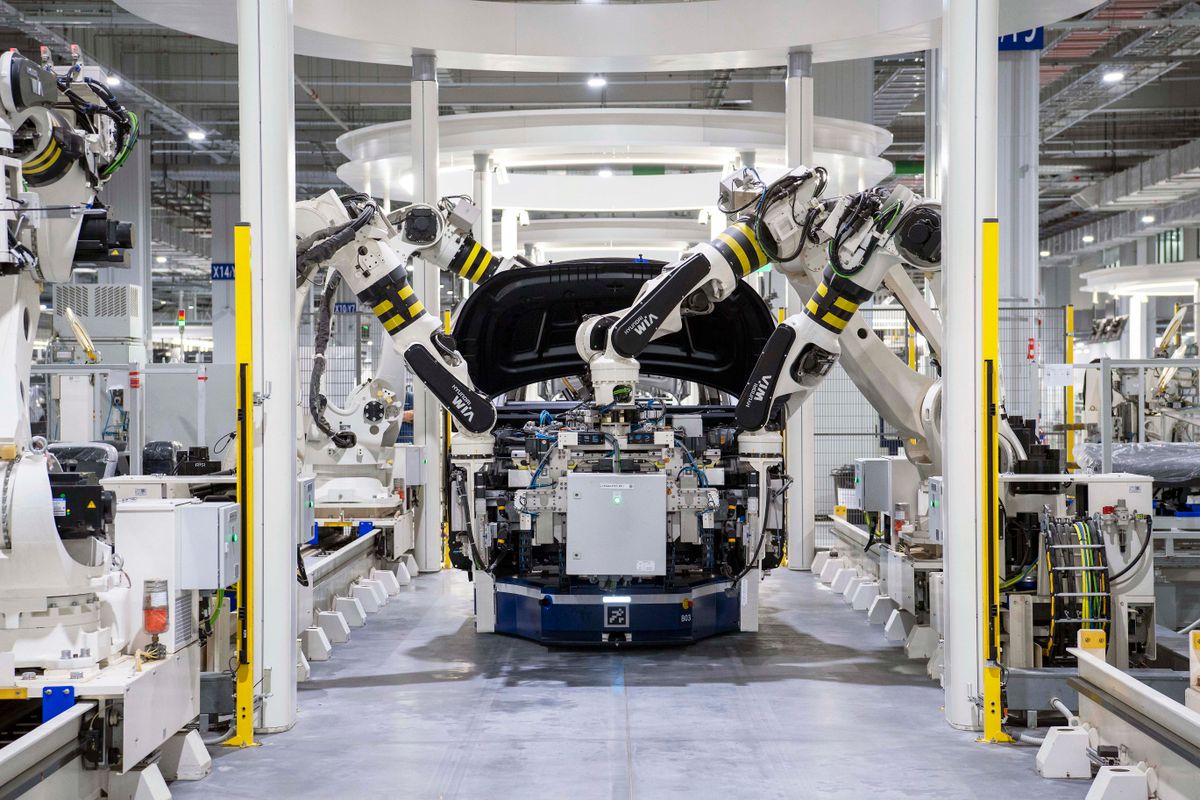
Locally assembled EVs continue to enjoy import and excise duty exemption until 31 December 2027. This is why Chinese brands including Zeekr, Xpeng and MG have moved to local assembly rather than exit, and why BYD and Chery obtained manufacturing licences — Chery from MITI on 26 June 2025, BYD an interim licence on 29 September 2025.
But the licence granted in 2026 is not the licence granted in 2022. For new CKD entrants approved after 1 September 2025, the conditions publicly set out by MITI include:
| Condition | Substance | Why it is there |
|---|---|---|
| Export orientation | The bulk of production is to be exported — reported at 80% of output for new plants approved after 1 September 2025 | Aligns with the National Automotive Policy 2020 and NIMP 2030 goal of a regional production and export hub for next-generation vehicles |
| Domestic price floor | Locally assembled units sold in Malaysia at a minimum of RM100,000 | Prevents new CKD capacity from displacing the national marques and the existing vendor ecosystem at the entry-level price point |
| Domestic volume cap | In BYD's case, a reported cap of 10,000 units per year for the local market, around 20% of planned production | Same objective, applied as a quantity rather than a price constraint |
| Real localisation | Body shop, paint and trim — welding, painting and final assembly — must be performed in Malaysia | Excludes screwdriver assembly; forces capital investment and a genuine local supply chain |
MITI has stated publicly that these conditions are not directed at any single company and apply to any new CKD entrant. That is the point worth internalising: they are the standing terms of entry, not a negotiating position. As of December 2025, 14 of the 34 foreign automotive brands present in Malaysia were Chinese, and the framework is calibrated for that reality.
The manufacturing licence itself: ICA 1975 mechanics
Underneath the EV-specific conditions sits the ordinary Malaysian manufacturing approval. A manufacturing company requires a Manufacturing Licence under the Industrial Co-ordination Act 1975 once it has shareholders' funds of RM2.5 million or more, or 75 or more full-time employees. Below both thresholds, a Confirmation Letter of Exemption from Manufacturing Licence may be obtained from MIDA instead. No serious vehicle or major component plant sits below those thresholds; component and sub-assembly operations sometimes do, and the exemption letter is a legitimate and much faster route for them.
The licence is issued by MITI on MIDA's evaluation, and it is conditional — on activity, product scope, equity, employment and, in the EV case, on the export and localisation terms above. Our guide to the MIDA manufacturing licence and the incentive framework covers the base process; the end-to-end factory setup guide covers what happens on the ground once the licence exists — land, DOE, Bomba and CCC.
Where the incentive actually is in 2026: the NIF, not the vehicle
Two changes have quietly reshaped the incentive question, and investors still working from 2023 advice will get this wrong.
First, the EV charging equipment incentive window has closed to new applicants. The scheme was generous — 100% income tax exemption on statutory income from YA 2023 to YA 2032, or alternatively an investment tax allowance of 100% of qualifying capital expenditure over five years — subject to a manufacturing licence or MIDA exemption letter, at least 80% Malaysian full-time employees, and at least 20% value add. But MIDA accepted applications only from 25 February 2023 until 31 December 2025. Companies already approved retain their entitlement to YA 2032. New entrants do not join that scheme.
Second, the New Incentive Framework (NIF) replaced the old activity-based route. Announced under Budget 2026 and implemented for the manufacturing sector from 1 March 2026 (services following in Q2), the NIF supersedes the traditional Pioneer Status and Investment Tax Allowance approach under the Promotion of Investments Act 1986 for new applications. Incentives are now awarded on a scoring basis against measurable outcomes — value creation, quality jobs, technology transfer, supply-chain depth and sustainability — rather than by sector classification or capital size. Under the new-investment category, ITA may run up to 100% of qualifying capital expenditure for up to 15 years, offsetting between 70% and 100% of statutory income.
| If you are… | The 2026 route |
|---|---|
| An OEM importing CBU EVs below ~RM300,000 RRP | No viable route after 1 July 2026. Localise, reposition upmarket, or exit the segment. |
| An OEM building a CKD plant | Manufacturing Licence with export, price-floor and localisation conditions; duty exemption to 31 Dec 2027; incentive application under the NIF. |
| A tier-1 or tier-2 component maker (battery packs, e-axles, BMS, thermal, castings, wiring) | The strongest position in the market. ML or MIDA exemption letter; NIF scoring rewards exactly what you supply — localisation depth and technology transfer. |
| An EV charging equipment manufacturer | The dedicated scheme closed to new applicants on 31 Dec 2025. Apply under the NIF instead. |
| A distributor or after-sales operator | Not a manufacturing question. Structure around trade, WRT licensing and service-sector rules. |
The overlooked consequence: the localisation rule is a procurement mandate
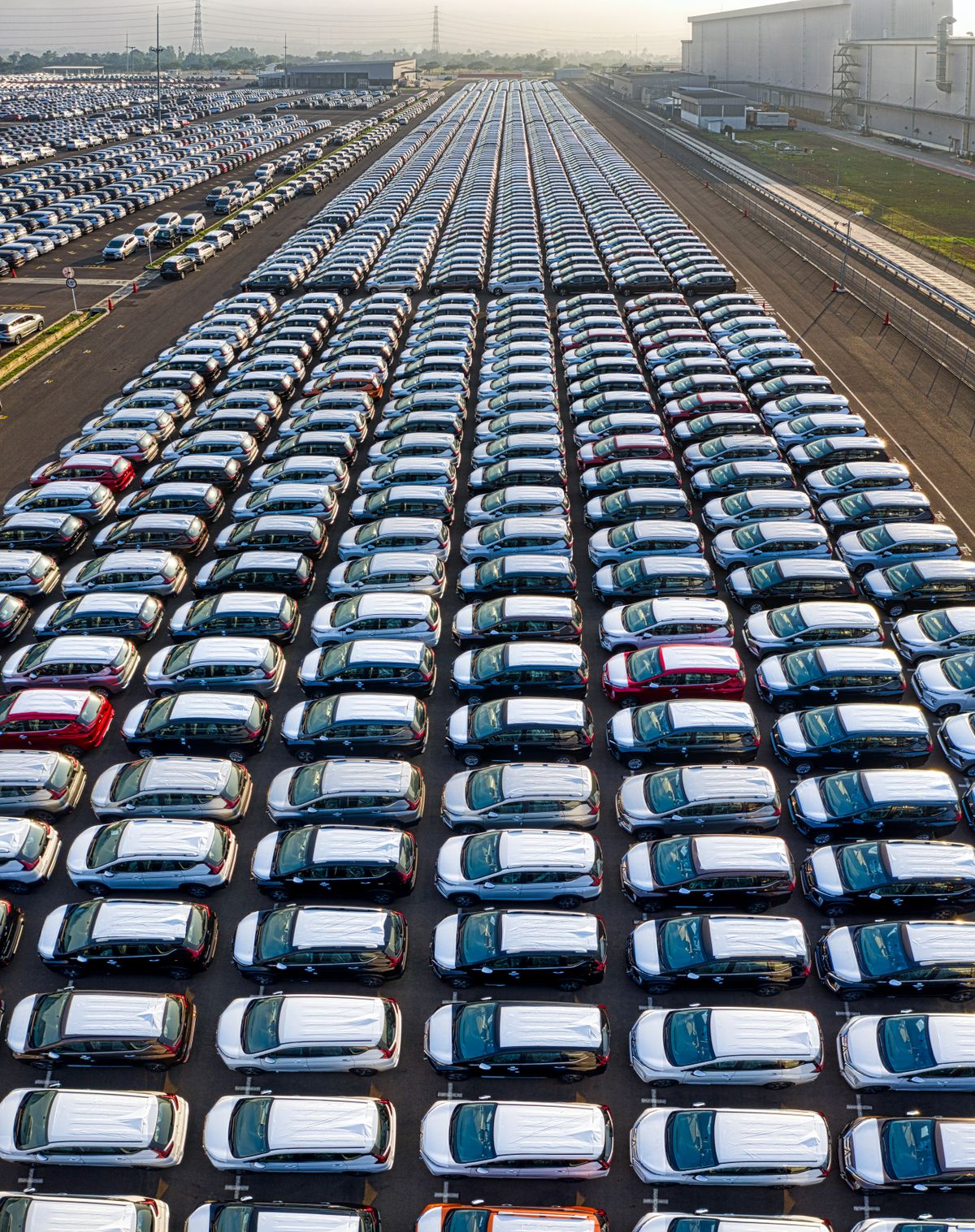
Requiring body shop, paint and trim in Malaysia does more than raise the OEM's capital cost. It creates a compulsory local demand curve for stampings, welding consumables, paint systems, seats, interior trim, harnesses, glass and fasteners — for every new plant, simultaneously, on a deadline set by the 2027 expiry.
For Chinese tier-1 and tier-2 suppliers, this is the actual opening, and it is a better one than the vehicle itself. The OEM must accept export obligations, a price floor and a volume cap; the supplier faces none of those. The supplier can often stay under the ICA 1975 thresholds initially and operate on a MIDA exemption letter. And the supplier's profile — localisation depth, technology transfer, skilled employment — is precisely what the NIF scoring is built to reward.
Two operational notes follow. Supplying an export-oriented plant makes your own customs position central from day one: Licensed Manufacturing Warehouse (LMW) or free zone status determines whether duty is suspended on imported inputs, and it is far cheaper to design for than to retrofit. See our guides to free zones and to industrial land and factory acquisition, because proximity to the OEM cluster — Tanjung Malim, Kedah, Johor — is a real constraint on site selection, not a preference.
Four misreadings that cost real money
"The exemption runs to 2027, so we have two years." You have two years of exemption. You do not have two years of runway: a manufacturing licence application, land acquisition, DOE and Bomba approvals, plant construction, commissioning and type approval will consume most of that period. A project starting from scratch in late 2026 should assume it captures little or none of the exemption and must be viable without it.
"We will assemble here, so the CBU rules do not concern us." They govern your transition. Most OEMs sell CBU while the plant is built. From 1 July 2026 that bridge is priced out of the mass market, which changes the cash-flow profile of the entire localisation project.
"We can negotiate the export condition." MITI's position is that the conditions apply to any new CKD entrant and are not directed at a particular company. Build the plan around them.
"We qualified for an incentive when we last looked." Advice given before 1 March 2026 largely describes a framework that no longer accepts new applications. Pioneer Status, the old ITA route and the EV charging equipment scheme have each been superseded or closed. Re-run the analysis under the NIF.
What to do with this
If you are an OEM, the question is binary and time-boxed: commit to a CKD footprint on MITI's published terms, or reposition to a segment where a RM300,000-plus imported vehicle makes sense. There is no middle path in the mass market, and waiting is itself a decision, because every quarter spent deciding is a quarter subtracted from a window that closes on 31 December 2027.
If you are a component supplier, the position is far more comfortable than the headlines suggest. Malaysia has just mandated local body-shop, paint and trim operations for every new entrant while simultaneously introducing an incentive framework that scores localisation depth and technology transfer. That is a demand mandate and a subsidy pointed at the same activity — and unlike the vehicle makers, you are not carrying an export obligation or a price floor.
ONEKEY BIZ helps Chinese automotive and EV supply chain companies enter Malaysia end to end — company structuring, Manufacturing Licence and MIDA exemption applications, NIF incentive positioning, industrial land and factory setup, LMW and free zone strategy, and Employment Passes for technical staff. Begin with the MIDA manufacturing licence service, or speak to our team about where your project sits against the 2027 window.
Frequently asked questions
Can I still import EVs into Malaysia duty-free?
No. The import and excise duty exemption on CBU (fully imported) EVs ended on 1 January 2026 and was not extended. The EV road tax holiday, in force since 1 January 2022, ended on the same date and was replaced by a new structure based on the electric motor's kilowatt output. Only CKD (locally assembled) EVs retain the exemption, and only until 31 December 2027. Because Malaysian vehicle taxation is cumulative — excise duty is calculated on a base that already includes import duty, and sales tax on top of both — the reinstatement is a larger cost increase than the headline rates suggest, and rules of origin under an applicable FTA are now the single largest variable in landed cost.
What is the RM200,000 CIF and 180 kW rule?
From 1 July 2026, MITI applies a blanket gate to CBU EV imports: a minimum CIF value of RM200,000 and a minimum output of 180 kW (245 PS). It applies to all CBU EVs, existing brands and new, replacing an earlier rule of RM250,000 and 200 kW that applied only to brands new to Malaysia; ready stock and vehicles in transit were exempted. Its function is not revenue. Starting from a RM200,000 CIF floor and adding reinstated import duty, excise duty, sales tax on a cumulative base and distributor margin puts the resulting retail price of a Chinese-origin import around RM300,000, higher for European or Korean vehicles. The stated aim is to promote domestic CKD assembly and protect investment by national companies and local vendors. In planning terms: if your Malaysian volume model is imported and priced below roughly RM300,000, you do not have a Malaysian volume business after 1 July 2026.
What conditions come with a new CKD manufacturing licence?
The licence granted in 2026 is not the licence granted in 2022. For new CKD entrants approved after 1 September 2025, the conditions MITI has set out publicly include an export orientation reported at 80% of output, a domestic price floor of RM100,000 for locally assembled units sold in Malaysia, a domestic volume cap (in BYD's case a reported 10,000 units a year, around 20% of planned production), and mandatory body shop, paint and trim — welding, painting and final assembly performed in Malaysia. MITI has stated that these apply to any new CKD entrant and are not directed at a particular company. Treat them as standing terms of entry rather than a negotiating position, and note that the 80% export obligation is a business model condition: a plant justified solely by Malaysian domestic demand cannot satisfy it.
Which incentive can an EV or component investor apply for in 2026?
Advice given before 2026 is largely out of date on this point. Two things changed. The dedicated EV charging equipment incentive — 100% income tax exemption on statutory income from YA 2023 to YA 2032, or a 100% investment tax allowance over five years, conditional on a manufacturing licence or MIDA exemption letter, at least 80% Malaysian full-time employees and at least 20% value add — accepted applications only until 31 December 2025. Companies already approved keep their entitlement; new entrants cannot join. And the New Incentive Framework (NIF), announced under Budget 2026 and implemented for manufacturing from 1 March 2026, supersedes Pioneer Status and the old ITA route under the Promotion of Investments Act 1986 for new applications. Incentives are now scored against measurable outcomes — value creation, quality jobs, technology transfer, supply-chain depth and sustainability — with ITA of up to 100% of qualifying capital expenditure for up to 15 years, offsetting 70% to 100% of statutory income.
Do I need a Manufacturing Licence, and where is the real opportunity now?
Under the Industrial Co-ordination Act 1975, a manufacturing company needs a Manufacturing Licence once it has shareholders' funds of RM2.5 million or more, or 75 or more full-time employees. Below both thresholds a Confirmation Letter of Exemption from MIDA is available instead — a legitimate and much faster route that many component and sub-assembly operations can use initially. And that is where the opportunity has moved. Requiring body shop, paint and trim in Malaysia creates a compulsory local demand curve for stampings, paint systems, seats, interior trim, harnesses, glass and fasteners, for every new plant simultaneously, on a deadline set by the 2027 expiry. The OEM carries the export obligation, the price floor and the volume cap; the tier-1 or tier-2 supplier carries none of them, and its profile — localisation depth, technology transfer, skilled employment — is exactly what NIF scoring rewards. Design the customs position (LMW or free zone) in from day one rather than retrofitting it.
Related services
We handle the process described in this article end-to-end.
- Manufacturing Licence (ICA 1975) ApplicationApply for a MIDA Manufacturing Licence under ICA 1975.
- Exemption from Manufacturing Licence (ICA 1975)Confirmation letter of ML exemption for smaller manufacturers.
- Investment Tax Allowance (ITA) ApplicationApply for the Investment Tax Allowance under Malaysia's New Investment Incentive Framework.
Sources & references
- New Incentive Framework (NIF) — Ministry of Investment, Trade and Industry (MITI)
- New Incentive Framework (NIF) — Malaysian Investment Development Authority (MIDA)
- New Incentive Framework (NIF) — Invest Malaysia, Government of Malaysia
- MITI: Govt provides incentives for EV charging infrastructure development — MIDA
- MITI Reaffirms Commitment to Sustainable Automotive Growth — Media Release, MITI
- Incentives — Setting Up in Malaysia, MIDA
This article is general information only, not legal, tax or immigration advice. Policies, thresholds and official fees are set by the relevant Malaysian authorities and may change. Talk to our consultants about your specific situation.