Education is one of the very few sectors in Malaysia where a foreign investor may hold 100% of the equity, sell to Malaysian citizens without a quota, and charge fees in ringgit that comfortably clear five figures a year — and it is also one of the very few where the company you incorporate is the least significant approval you will obtain. An education business is not licensed the way a trading company is licensed. It is registered: a named institution, at a named address, with a named person in charge, entered on a register kept by a Registrar General or by the Ministry of Higher Education. Nothing about that register is portable. Move the building and the registration does not follow. Change the person in charge and it must be re-approved. This guide sets out the three statutory tracks — tuition and language centres, private and international schools, and private higher educational institutions — the paid-up capital rule that only bites on one of them, the sequence in which approvals must be obtained (which is not the sequence most investors assume), the teaching permits that decide whether your imported faculty may legally stand in front of a class, and the 6% service tax that since 1 July 2025 attaches to fees rather than to turnover.
Quick answer (as at 2 October 2026): A tuition centre in Malaysia must be 100% owned by Malaysian citizens; foreign equity is not permitted under section 6.3.2 of the Ministry of Education's tuition centre guideline, as reported in September 2026. The separate 30% Bumiputera equity condition, which dates from the 2006 private education policy book, was dropped by the Ministry on 21 September 2026, but the revised written guideline had not been published at the time of writing. Language and skills centres may take foreign equity within Malaysia's FTA commitments. International schools and private universities have been open to 100% foreign equity since 1 March 2012, and a private university needs RM1 million paid-up capital plus a RM1 million initial fund.
Three tracks, two statutes, and why the distinction decides everything
Malaysian private education is governed by two principal Acts, and almost every early mistake made by a foreign investor is a mistake about which one applies. The Education Act 1996 (Act 550) governs everything up to and including post-secondary schooling — kindergartens, private national schools, international schools, tuition centres, language centres, skills and enrichment centres. The Private Higher Educational Institutions Act 1996 (Act 555) governs everything above it — colleges, university colleges, universities and branch campuses of foreign universities.
The two Acts have different regulators, different capital rules, different approval sequences and different tax outcomes. A "school" and a "college" are not points on a spectrum; they are separate regulatory universes.
| Tuition / language / enrichment centre | Private & international school | Private higher educational institution (PHEI) | |
|---|---|---|---|
| Statute | Education Act 1996 (Act 550) | Education Act 1996 (Act 550) | PHEI Act 1996 (Act 555) |
| Regulator | State Education Department (JPN), under the Registrar General | Ministry of Education (MOE) — Standard Registration Division; state registration via JPN | Ministry of Higher Education (MOHE) — Department of Higher Education (JPT) |
| Foreign equity | Tuition centres: not permitted (100% Malaysian citizens). Language and skills centres: within FTA limits | Up to 100% for international schools (liberalised 1 March 2012), subject to MOE approval | Up to 100% for private universities, subject to MOHE approval |
| Minimum capital | No minimum in the Act; the Ministry guideline is reported to set RM10,000 (tuition, enterprise) and RM50,000 (language or skills centre) | No statutory minimum in the Act; MOE assesses financial capacity | RM1,000,000 issued and paid-up capital and RM1,000,000 initial fund — Regulation 4, PHEI (Establishment of Private Higher Educational Institution and Branch) Regulations 2018 |
| Core approval | Certificate of registration of the institution | Approval to establish, then certificate of registration | Approval in principle, then Certificate of Registration, then course approval |
| Quality body | — | Curriculum approval by MOE | MQA accreditation, programme by programme |
| Can it recruit international students? | Generally no | Yes — with MOE approval; student passes via the immigration channel | Yes — via EMGS |

Tuition centres: the equity rule, and what changed in September 2026
Tuition centres are the one part of private education that foreign investors keep asking about, and the one part that is not open to them. The rule surfaced publicly on 17 September 2026, when operators were told that section 6.3.2 of the Ministry of Education's guideline on establishing, registering and operating tuition centres (Garis Panduan Penubuhan, Pendaftaran dan Pengoperasian Pusat Tuisyen) required a minimum 30% Bumiputera equity for centres registered as a Sdn Bhd, with non-compliant centres facing non-renewal from 2027. The condition traced back to the Ministry's 2006 private education institutions policy book.
After four days of public reaction, the Ministry announced on 21 September 2026 that the 30% Bumiputera equity condition would no longer apply to companies operating private education institutions under its purview. It said the decision followed discussions with MITI. On 22 September MITI said it had no knowledge of that coordination and that Bumiputera equity policy sits with the Ministry of Economy. The Ministry of Education has also said it will take a review of tuition centre ownership structure to Cabinet. Until the amended guideline is published, treat the Bumiputera condition as withdrawn by announcement, not yet by document.
| Point | Position | Status |
|---|---|---|
| Foreign equity in a tuition centre | Not permitted. A Sdn Bhd tuition centre must be 100% Malaysian-citizen owned (guideline s.6.3.2) | Unchanged |
| 30% Bumiputera equity | Required by the 2006 policy book and the guideline as reported on 17–19 September 2026 | Dropped by Ministry announcement on 21 September 2026; written amendment pending |
| Sole proprietorship or enterprise | Allowed; minimum equity reported as RM10,000 | Unchanged |
| Language and skills centres | Foreign equity allowed within Malaysia's FTA commitments; minimum equity reported as RM50,000 | Unchanged |
| Branches | Each branch must mirror the ownership structure of the parent centre | Unchanged |
| Regulator | State Education Department (JPN), registration under s.79 of the Education Act 1996 | Unchanged |
What the 2012 liberalisation actually gave you
Two separate changes are frequently conflated, and the difference matters commercially.
The first is equity. With effect from 1 March 2012, international schools were opened to 100% foreign equity, subject to the approval of the Ministry of Education. The same liberalisation extended to private universities and to technical and vocational institutions. There is no compulsory local partner and no nominee structure required. The 2006 policy book did set a 30% Bumiputera equity condition for certain private education institutions owned through a Sdn Bhd, but the Ministry announced on 21 September 2026 that this condition no longer applies (see the tuition centre section above). For a Chinese education group this is unusual and genuinely valuable: in most licensed Malaysian services sectors the cap table is an output of the licence conditions rather than a free commercial choice.
The second is market access. Before 2006 international schools were essentially closed to Malaysian children. A 40% local enrolment quota was then introduced, and in May 2012 that quota was abolished entirely. This, not the equity change, is what created the modern Malaysian international school market — within a few years Malaysians were the single largest nationality in the sector. An investor modelling revenue on expatriate demand alone is modelling the 2005 market.
Track A — Act 550: approval to establish, then registration
The Act 550 route runs in two distinct stages, and conflating them is the most common cause of a wasted year.
Stage one is approval to establish. The applicant — normally a Sdn. Bhd. incorporated under the Companies Act 2016, though a society or co-operative is possible — submits a proposal to the Ministry of Education describing the concept, curriculum, catchment, financial plan and proposed site. Approval to establish is typically valid for two years, within which the school must be built or fitted out and brought to registration; extensions may be granted. This approval is permission to build a school. It is not permission to teach anyone.
Stage two is registration of the institution. Section 79 of the Education Act 1996 requires every educational institution to be registered, on application to the Registrar General, using Form A of the First Schedule with the prescribed fee. The Registrar General inquires into the application, may impose any terms and conditions considered fit, and may refuse registration where the premises are unsuitable, the stated purpose is detrimental, information given is false, or the proposed chairman or head teacher is not a fit person. Pending investigation, a provisional certificate of registration may be issued at the Registrar General's discretion — useful, but conditional and revocable.
Registration will not be granted until the building is finished and cleared. In practice the Registrar requires the CCC or CF (or a permission to occupy), plus clearance from three separate authorities: the local authority, the Fire and Rescue Department (Bomba) and the health department. Those three clearances are the schedule.
Track B — Act 555: RM1 million, an approval in principle, and course-by-course approval
The higher education route is longer, more capital-intensive and more tightly supervised.
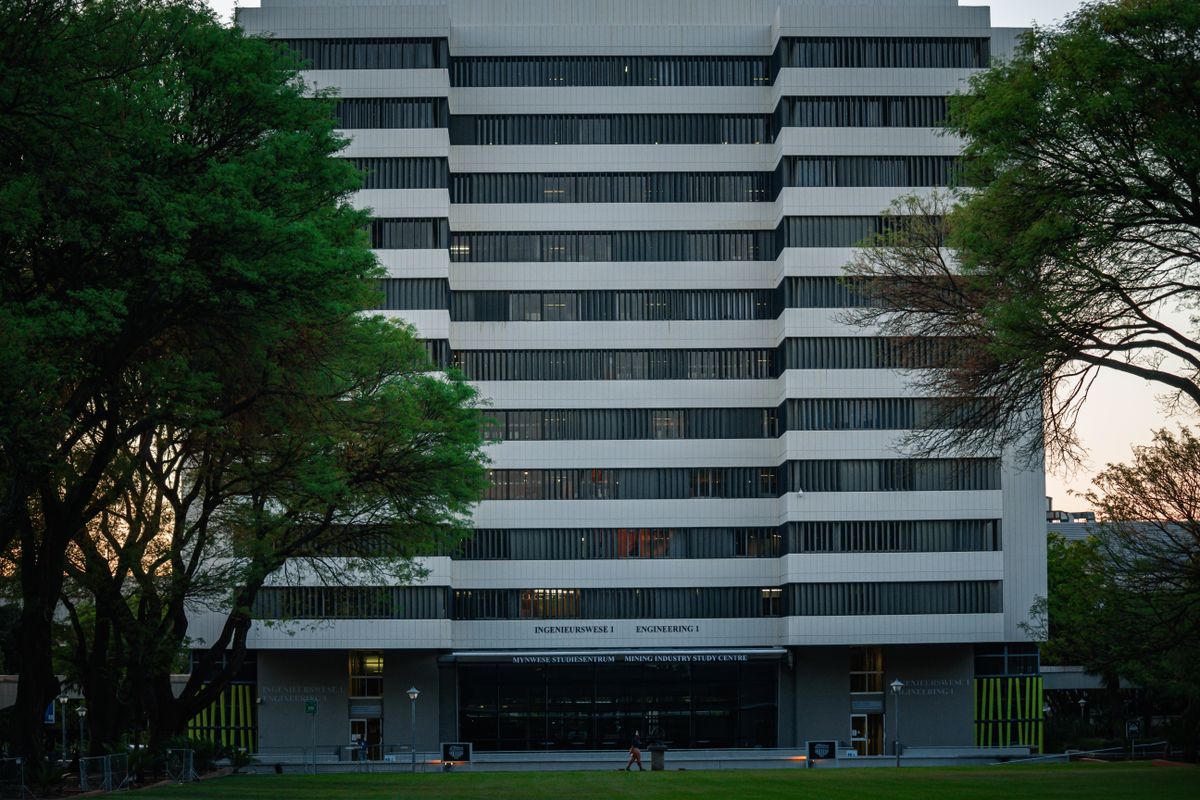
The applicant company must first obtain approval in principle from MOHE, by lodging a concept plan with the Registration and Standards Division and, if required, presenting it. The plan addresses academic positioning, governance, faculty, facilities, financial projections and the proposed programme portfolio. Only if MOHE is satisfied with the concept does the project proceed.
The capital rule is explicit. Regulation 4 of the Private Higher Educational Institutions (Establishment of Private Higher Educational Institution and Branch) Regulations 2018 provides that both the issued and paid-up capital and the initial fund of the company shall not be less than RM1 million. This is a real cash requirement, tested at application, and it is separate from the cost of the campus.
Registration under Act 555 produces a Certificate of Registration for the institution. It does not authorise a single course. Each programme requires its own MOHE approval and, separately, Malaysian Qualifications Agency (MQA) provisional accreditation and later full accreditation. A private university that is registered but whose flagship programme is not yet approved cannot enrol into that programme — and cannot obtain student passes for it.
| Approval | Body | What it authorises | What it does not authorise |
|---|---|---|---|
| Approval in principle | MOHE (JPT) | Proceeding with the project | Building, enrolling, teaching, marketing |
| Certificate of Registration (Act 555) | MOHE (JPT) | Operating the institution at that address | Teaching any particular programme |
| Programme approval | MOHE (JPT) | Offering the named programme | Claiming it is accredited |
| Provisional / full accreditation | MQA | Recognition of the award | Automatic recognition abroad |
| Student pass sponsorship | EMGS / Immigration | Enrolling non-Malaysian students | Employing them |
The premises are the bottleneck, and they come with their own licence stack

Whatever the track, an education institution is a place before it is a business, and the property approvals run in parallel with the education approvals rather than after them. The Malaysian framework for an international school maps out the following operational layer, all of it separate from the MOE or MOHE file:
| Requirement | Authority / statute | Note |
|---|---|---|
| Land use and planning permission | State land office / local authority | Institutional or educational use; conversion is slow where the title says something else |
| Construction / renovation approval | Local authority (e.g. DBKL in Kuala Lumpur) | Must be submitted by an appointed professional — architect or engineer |
| CCC / CF or permission to occupy | Local authority | Pre-condition to registration of the institution |
| Premises licence | Local authority — Local Government Act 1976 | Annual; separate from the education registration |
| Advertisement / signboard licence | Local authority | Signage, lamp-post and outdoor display are separately licensed |
| Fire safety inspection | Fire and Rescue Department (Bomba) — Fire Services Act 1988 | Frequently the longest single item on a school fit-out |
| Food premises registration and food handler certificates | Ministry of Health — Food Hygiene Regulations 2009 | Applies the moment there is a canteen |
| Assessment tax and quit rent | Local authority / state land office | Ongoing property taxes on the site |
Teachers: registration, permits and Employment Passes are three different things

The Education Act 1996 provides that no person shall teach in an educational institution unless registered as a teacher under the Act. Members of the Education Service teaching in government or government-aided institutions are exempt; private-sector teachers are not. The Registrar General may refuse registration where the applicant is under 18, lacks adequate teaching qualifications, has made a false statement, is physically or mentally unsuited, has been convicted and sentenced to imprisonment of a year or more or fined RM2,000 or more, or is simply not a fit and proper person. Teachers must also notify the Registrar General when they begin or cease employment at a school.
Layered on top of that, local and foreign teaching staff require a teaching permit issued through the Ministry. And separately again, a foreign teacher, principal or dean needs an Employment Pass, which since 1 June 2026 is graded by salary — EP I at RM20,000 and above, EP II at RM10,000 to RM19,999 and EP III at RM5,000 to RM9,999. A school that has budgeted RM6,500 a month for an experienced foreign subject teacher has budgeted an EP III, with the shortest duration and the least dependant flexibility in the system. See our guide to the June 2026 Employment Pass salary thresholds before the offer letters go out, not after.
Students: EMGS, the eVAL, and who may actually sponsor a pass

For higher education, international student passes are centralised through Education Malaysia Global Services (EMGS). The critical structural point is that the student cannot apply. The institution lodges the application once an offer has been issued and the required deposit paid, EMGS assesses it, and an electronic Visa Approval Letter (eVAL) is issued, on the strength of which the student enters Malaysia and completes the pass endorsement. A medical screening at an EMGS-registered clinic follows within roughly a week of arrival, at the student's cost.
That flow has a commercial consequence that is easy to miss during feasibility. Your ability to sell to international students is downstream of your own registration and programme approvals. A campus that opens on time but whose programme approval is still pending has, in effect, no international intake that year — while its fixed costs run in full.
The 6% service tax that now follows the fee, not the turnover
Since 1 July 2025, private education services have been within the scope of service tax at 6%, and the design of the charge is unusual enough to be worth stating precisely.
| Segment | Trigger | Rate |
|---|---|---|
| Private preschool, primary, secondary and post-secondary (Act 550), including international schools | Fees exceeding RM60,000 per student per academic year | 6% |
| Private higher education (Act 555) | Education services provided to non-Malaysian students | 6% |
| Malaysian citizens | Exempt | — |
| Malaysian citizens with disabilities (OKU cardholders) and special education | Exempt | — |
Note what this is not. It is not a turnover-based registration in the ordinary sense: a school does not escape by being small, and it does not necessarily fall in by being large. The trigger for a school is the per-student annual fee. A premium international school charging RM75,000 a year is inside the charge on those students from the first enrolment; a mid-market school at RM45,000 is outside it however many pupils it teaches. For a private university the trigger is the nationality of the student, which turns your international recruitment strategy into a tax question. Our guide to the SST expansion sets out the wider machinery — registration, invoicing and returns — that follows once you are in scope.
Five ways these applications die
Signing a lease before the concept is approved. Investors routinely secure a building to demonstrate seriousness, then discover the site cannot obtain educational land use, cannot satisfy Bomba, or cannot be given a CCC in the intended configuration. The lease runs; the approval does not.
Assuming the company approval is the licence. Incorporating a Sdn. Bhd. with an education-sounding name and an education-sounding objects clause creates nothing but a company. See our step-by-step guide to incorporating with SSM for what that step does and does not deliver.
Under-capitalising the PHEI. RM1 million of paid-up capital and a RM1 million initial fund is the floor, and it is tested before approval. Capital committed to fit-out does not substitute for it.
Recruiting faculty before the permits exist. Teacher registration, permit to teach and Employment Pass are three sequential approvals with independent failure modes. Contracts signed on the assumption that a foreign hire can start next term are contracts with an unpriced risk in them.
Treating an approval as transferable. Registration is tied to the institution, the premises and the person in charge. A relocation, a change of head teacher or a change of controlling shareholder is a regulatory event, not an internal one.
Choosing an entry point
For most foreign groups the honest sequencing question is not "school or university" but "how much regulatory runway can the balance sheet fund before the first fee is collected". A language or enrichment centre is the shortest path to a lawful, revenue-generating Malaysian education operation and the cheapest way to test demand, but it will not carry international student intake. An international school is the sector's commercial centre of gravity — 100% foreign equity, no local enrolment cap, strong domestic demand — at the price of a two-stage approval and a building programme. A PHEI is a multi-year capital project in which registration is only the beginning, because every programme is separately approved and separately accredited.
Whichever track fits, the ordering principle is the same: settle the site and its land use first, the concept approval second, the building and its three clearances third, and the people and the students last. Applications that fail almost always failed at step one and only discovered it at step three.
ONEKEY BIZ advises Chinese and other foreign education groups on Malaysian market entry end to end — company structuring and incorporation, site and land-use assessment, MOE and MOHE approval strategy, the local authority and Bomba stack, Employment Passes for foreign faculty, and the SST position on your fee schedule. Start with company incorporation and structuring, or talk to our team about the specific site and curriculum you have in mind.
Frequently asked questions
What is the equity requirement for a tuition centre in Malaysia?
As at 2 October 2026, a tuition centre must be 100% owned by Malaysian citizens. Foreign equity is not permitted under section 6.3.2 of the Ministry of Education's tuition centre guideline. The 30% Bumiputera equity condition from the 2006 policy book was dropped by the Ministry on 21 September 2026, though the amended written guideline had not yet been published. Sole proprietorships and enterprises are allowed, with a minimum equity reported as RM10,000. Language and skills centres may take foreign equity within Malaysia's FTA commitments.
Can a foreign company own 100% of a Malaysian international school or private university?
Yes. With effect from 1 March 2012, international schools were opened to 100% foreign equity, subject to the approval of the Ministry of Education; the same liberalisation covered private universities (approved by the Ministry of Higher Education) and technical and vocational institutions. There is no compulsory local partner written into the sector rule. But ownership and control are different things: the institution is registered subject to conditions, and the premises, the head teacher, the curriculum and in practice the fee schedule all sit inside that approval. You own the economics; you do not get unilateral operational discretion.
How much capital do I actually need?
It depends entirely on which track you are on. For a tuition or language centre and for a school under the Education Act 1996 there is no statutory minimum — the Ministry assesses financial capacity against the plan. For a private higher educational institution under Act 555 the figure is explicit: Regulation 4 of the Private Higher Educational Institutions (Establishment of Private Higher Educational Institution and Branch) Regulations 2018 requires both the issued and paid-up capital and the initial fund to be not less than RM1 million each. That is cash tested at application, and it is separate from the cost of the campus itself.
Does the 6% service tax apply to my school?
Since 1 July 2025, private education services fall within service tax at 6%, but the trigger is unusual. For private preschool, primary, secondary and post-secondary institutions — including international schools — the charge applies where fees exceed RM60,000 per student per academic year. It is not a turnover test: a small school above the fee line is in scope, a large school below it is not. For private higher education under Act 555 the trigger is the student's nationality — services to non-Malaysian students are taxable. Malaysian citizens are exempt, as are Malaysian OKU cardholders and special education. Because the charge is a cliff rather than a slope, schools pricing near RM60,000 should decide deliberately which side of it to sit on and confirm which fee components are chargeable against current Royal Malaysian Customs guidance.
Can I bring in foreign teachers?
Yes, but three separate approvals stand between the hire and the classroom, each with its own failure mode. First, the Education Act 1996 provides that no person shall teach in an educational institution unless registered as a teacher; the Registrar General may refuse on grounds including inadequate teaching qualifications or not being a fit and proper person. Second, local and foreign teaching staff require a teaching permit issued through the Ministry. Third, the individual needs an Employment Pass, graded by salary since 1 June 2026 — EP I at RM20,000 and above, EP II at RM10,000–19,999, EP III at RM5,000–9,999. A school budgeting RM6,500 a month for an experienced subject teacher is budgeting an EP III, the shortest-duration and least flexible category. Sequence the offer letters accordingly.
Related services
We handle the process described in this article end-to-end.
- Sdn. Bhd. Company Incorporation in MalaysiaRegister a private limited company (Sdn. Bhd.) with SSM end-to-end.
- Annual Return Filing (Section 68) for Sdn. Bhd.Lodge your company’s yearly annual return with SSM on time.
- Appointment & Resignation of DirectorsUpdate your board — appoint or resign directors (Section 58/201).
Sources & references
- International Schools — Business Enabling Framework, Ministry of Investment, Trade and Industry (MITI)
- Ministry of Education Malaysia (KPM) — Official Portal
- Act 555 — Private Higher Educational Institutions, Department of Higher Education (JPT), Ministry of Higher Education
- Education Malaysia Global Services (EMGS) — Official Portal
- MySST — Royal Malaysian Customs Department, Service Tax Guides
- Laws of Malaysia — Official Portal, Attorney General's Chambers
This article is general information only, not legal, tax or immigration advice. Policies, thresholds and official fees are set by the relevant Malaysian authorities and may change. Talk to our consultants about your specific situation.