A Chinese steel processor opens a plant in Klang. The landed-cost model says Chinese hot-rolled coil at USD 520 a tonne. The first container clears and Customs assesses an extra 20.42% that nobody budgeted for — an anti-dumping duty that has been sitting in a Customs Order since May 2025. Eighteen months later the same company gets a different letter: its US customer says the Malaysian-made output is being examined as a circumvention of a duty on Chinese goods. Both problems come from the same body of law, and almost nobody setting up in Malaysia reads it until it bites. This guide covers Malaysia's trade remedies regime end to end — the two statutes, who investigates and on what timetable, what is actually in force against Chinese-origin goods today, the anti-circumvention provisions Parliament added in 2025, the origin rules that decide whether your Malaysian output is genuinely Malaysian, and how to design the operation so it survives an audit.
Two statutes, one investigating authority
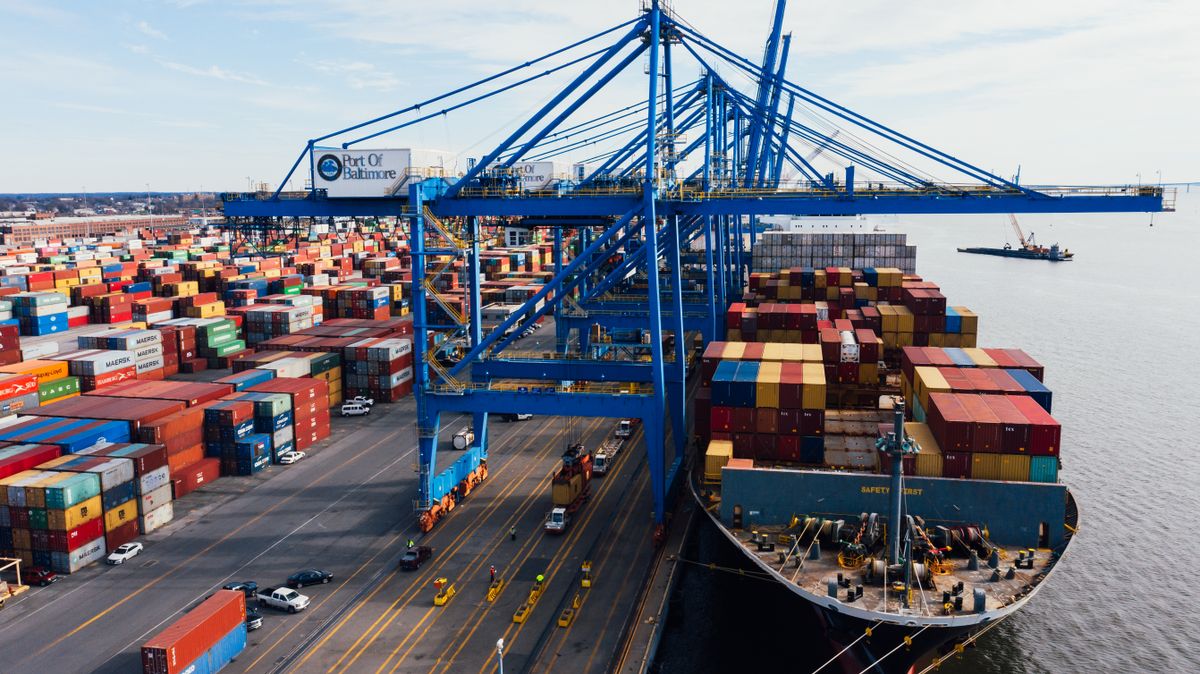
Malaysia's trade defence sits in two Acts, both administered by the Ministry of Investment, Trade and Industry (MITI) through its Trade Practices Section, which acts as the Investigating Authority. Duties, once imposed, are collected by the Royal Malaysian Customs Department (RMCD) at import under Customs Orders made for each case.
| Anti-dumping & countervailing | Safeguards | |
|---|---|---|
| Statute | Countervailing and Anti-Dumping Duties Act 1993 (Act 504) | Safeguards Act 2006 (Act 657) |
| Subsidiary legislation | Countervailing and Anti-Dumping Duties Regulations 1994 | Safeguard Regulations 2007 |
| What it targets | Unfair pricing (dumping) or foreign government subsidy, country- and exporter-specific | A surge in imports causing serious injury, regardless of fairness |
| Country-specific? | Yes — rates differ by exporter and by country | No — applies to imports generally |
| Form of remedy | Ad valorem duty on the specific product from the specific exporters | Higher customs duty, additional financial liability, quantitative restriction, or a combination |
| WTO basis | Anti-Dumping Agreement; Agreement on Subsidies and Countervailing Measures | Agreement on Safeguards |
The practical difference matters when you are budgeting. An anti-dumping duty is exporter-specific: one Chinese mill may carry 4.48% and another 20.42% on the identical HS code. A safeguard measure is blunt — it lands on everyone. Anti-dumping is by far the more common of the two in Malaysia, and steel is by far the most common subject.
What has to be proved before a duty exists
MITI cannot impose a duty because an import is cheap. Three findings have to be made, and each is a separate battleground:
- Dumping. The export price to Malaysia is below the normal value — usually the price in the exporter's home market, or a constructed value built from cost of production plus a reasonable margin where home-market sales are unrepresentative. The gap, expressed as a percentage, is the dumping margin and becomes the duty rate.
- Injury. The domestic industry is materially injured, threatened with material injury, or its establishment is materially retarded — shown through lost volume, price depression, price suppression, margins, capacity utilisation, employment.
- Causal link. The injury is caused by the dumped imports rather than by other factors, which the authority must examine and not attribute to the imports.
Before any of that, the petition has to clear a standing test. The producers supporting it must account for more than 50% of the total production of those domestic producers who express either support or opposition, and the supporters must represent at least 25% of total domestic production. This is why a single large producer can start a case in a concentrated industry such as flat steel, and why fragmented industries almost never do.
The timetable, day by day
The single most useful thing to know about a trade remedies case is that it runs on fixed clocks, and that the expensive moment arrives long before the final decision. Provisional duties can attach roughly five months into a case that will not conclude for another year.
| Stage | Clock | What it means for an importer |
|---|---|---|
| Pre-lodgement consultation | Informal | Invisible to you. The petitioner works with the Trade Practices Section on the shape of the petition. |
| Petition filed; prima facie examination | 30 days to accept or reject | Still invisible. Exporting governments are notified of receipt. |
| Initiation notice published | Day 0 | Questionnaires go to known exporters and importers. Deadlines are short and are enforced. |
| Preliminary determination | Within 120 days of initiation, extendable by 30 days | The first public number. An affirmative PD sets provisional rates. |
| Provisional measures | Not earlier than 60 days after initiation; maximum 4 months, extendable by 30 days | Bank guarantee or bank draft lodged at import. Cash flow stops here, not at the final determination. |
| Final determination | Within 120 days of publication of the PD notice | Definitive rates, published as a Customs Order and collected by RMCD. |
| Definitive duty in force | 5 years from publication of the final determination | Budget it as a five-year cost, not a temporary shock. |
| Administrative review | Available after at least 1 year | Changed circumstances, or whether the duty is still necessary. |
| Expiry (sunset) review | Before the 5 years run out | A duty can be renewed for a further 5 years from the conclusion of the review. |
Two consequences follow. First, if a questionnaire arrives, answering it properly is not optional — an exporter that does not cooperate is assessed on the facts available, which in practice means the residual "all others" rate, and that is always the highest rate in the Order. Second, the exporter-specific rate belongs to the exporter that earned it; if you switch mills to one that did not participate, you inherit the residual rate on your next container.
What is actually in force, and what is coming
Steel dominates. As at the date of writing, definitive anti-dumping duties are being collected by RMCD on imports of flat-rolled products of iron and non-alloy steel and of tinplate from the People's Republic of China at rates of 4.48% to 20.42%, imposed for five years running from 11 May 2025 to 10 May 2030. Duties are also in force on polyethylene terephthalate (PET) from China and Indonesia.
The live case to watch is newer. In August 2026, MITI initiated an anti-dumping investigation into imports of flat-rolled alloy and non-alloy steel products plated or coated with aluminium and zinc from China, Chinese Taipei and Vietnam, on a petition by NS BlueScope Malaysia Sdn. Bhd. It was initiated under section 20 of Act 504 and Regulation 7 of the 1994 Regulations, with an injury assessment period of 1 January 2023 to 31 December 2025 and an investigation period of 1 January to 31 December 2025. A preliminary determination is due within 120 days of initiation. At the same time MITI opened an expiry review of the existing duties on prepainted steel coil from China and Vietnam — meaning those duties are more likely to be renewed than to lapse.
The 2025 amendment: circumvention becomes a case type
Act 504 was drafted in 1993 and has been visibly behind the trade patterns of the last decade. Two changes closed the gap. First, the Countervailing and Anti-Dumping Duties (Amendment) Regulations 2025, gazetted on 5 February 2025, moved the procedure to a paperless framework. Then the Countervailing and Anti-Dumping Duties (Amendment) Bill 2025 was tabled in the Dewan Rakyat on 30 July 2025 and passed on 26 August 2025.
The amendment does several things, but one matters more than the rest. It inserts a definition of circumvention into section 2 — "an action of an exporter or a producer of the subject merchandise to avoid or undermine the countervailing or anti-dumping duties imposed by the Government" — and builds a whole investigation type around it in new sections 37A and 37B.
| Provision | What it does |
|---|---|
| s2 (new definition) | Defines "circumvention" broadly as any action by an exporter or producer to avoid or undermine an imposed duty. |
| s2 (new definition) | Defines "investigating authority" as a public officer or person appointed and authorised in writing by the Minister under the new subsection 30(2a). |
| s12 (substituted) | An investigation may be suspended where the exporting Member undertakes to eliminate or limit the subsidy, or an exporter undertakes to revise its prices. |
| s12A(2) and s27A | Countervailing and anti-dumping duties terminate no later than 5 years from imposition, or 5 years from the conclusion of the most recent expiry review. |
| s37A (new) | Anti-circumvention investigation: on an interested party's petition or on information the Government obtains itself. Rejected where evidence is insufficient or the investigation is not in the public interest. |
| s37B (new) | Determination: notice of initiation published, interested parties heard, essential facts disclosed before completion, determination published with reasons. |
| s37B(5) | On an affirmative finding the Minister may extend the existing duty or impose duty on imports from the circumventing exporters or producers. |
| s37B(7) | The determination applies to goods imported on or after the date the notice of determination is published — prospective, not retroactive. |
| s21 (saving) | Investigations and reviews pending at commencement continue under the amended Act, except pending judicial review of a s34A final administrative review determination and pending s13 or s28 administrative reviews. |
What circumvention actually looks like in a Malaysian factory
The word sounds like fraud. In most real cases it is not — it is an operating model that made commercial sense and happens to fall inside a legal definition drawn deliberately wide. The recurring patterns, in Malaysia and in the jurisdictions that will examine your exports:
- Third-country assembly. Components made in the country under duty are shipped to a third country, assembled there with little added value, and exported as products of the third country. If the assembly is minor relative to the whole, it is circumvention rather than manufacture.
- Minor alteration. The product is changed just enough to fall outside the written scope of the duty order — a slightly different alloy, coating, width or finish — with no commercial purpose beyond the tariff line.
- Later-stage product. The duty covers the input; the shipment is a lightly further-processed article that embodies it.
- Channelling through a non-named exporter. The goods physically originate with a mill carrying a high rate but are invoiced through a trader or an affiliate that carries the lower residual or zero rate.
For a Chinese group investing in Malaysia, this cuts in both directions and the second direction is the one that closes factories. Inbound, Malaysia's own new sections 37A and 37B mean that goods rerouted to dodge a Malaysian duty can have that duty extended to them. Outbound, the authorities that matter are in the destination markets, and they apply their own circumvention law to your Malaysian output. A plant that imports finished or near-finished Chinese product, performs cutting, coating or packing, and exports it as Malaysian is exposed in every one of them.

Origin: the rule that decides whether your output is Malaysian
Everything above turns on one question — is the good a product of Malaysia? That is answered by origin rules, not by where the company is registered or where the invoice is raised.
Since 6 May 2025, MITI is the sole issuer of Non-Preferential Certificates of Origin (NPCO) for shipments to the United States. Chambers of commerce, business councils and trade associations, which previously issued them, no longer do so for that market. MITI's stated reason was to address possible transshipment and protect the integrity of Malaysian origin — after reports that certificates were being obtained for as little as RM100 a container.
| Origin criterion | Test | Evidence you must be able to produce |
|---|---|---|
| Wholly obtained | Sourced or produced entirely in Malaysia | Local sourcing records, no imported input in the bill of materials |
| Change in tariff classification | Transformation in Malaysia that alters the HS code at the 6-digit level | Input HS codes against output HS code; process description; production records |
| Local content | At least 25% Malaysian content | Costed bill of materials, MITI cost analysis, supplier invoices, labour and overhead allocation |
Two practical points. First, a change of HS code at 6-digit is a real engineering fact about your process, not a paperwork choice — and cutting a coil to length or repacking a finished article usually does not produce one. Second, a 25% local content claim has to be computed from a costed bill of materials that someone in your finance function can defend line by line, to an officer who will compare it against your customs import declarations. If your accounting cannot separate imported input cost from Malaysian value added by product, you do not yet have an origin position; you have an assertion. Our guide to rules of origin and certificates of origin sets out the documentation in detail.
The destination-market picture, and why it keeps moving
Much of the pressure Malaysian-based exporters feel comes from outside Malaysia, and the United States has been the loudest source of it. The sequence matters, because the position has changed more than once:
- The Agreement on Reciprocal Trade (ART) between Malaysia and the United States was signed on 26 October 2025, under which the US applied a 19% reciprocal tariff on Malaysian-origin goods. It carried a severe anti-circumvention term: goods determined by US Customs and Border Protection to have been transshipped to evade duties attract an additional 40% ad valorem duty, and CBP is directed not to allow mitigation or remission of the penalties.
- On 20 February 2026 the US Supreme Court held, 6–3, that the International Emergency Economic Powers Act did not authorise most of those tariffs. Within hours the baseline was reimposed under Section 122 of the Trade Act of 1974 at 10%.
- On 15 March 2026 Malaysia's Minister of Investment, Trade and Industry stated that the ART was null and void — a position subsequently qualified, with officials confirming no formal withdrawal had been notified to Washington.
- The Section 122 baseline was itself held unlawful by the US Court of International Trade in May 2026, with a Federal Circuit stay keeping it in force pending appeal. Section 232 metals tariffs are a separate legal basis and were untouched; a Section 232 semiconductor investigation remains open, which matters a great deal to Malaysia's largest export sector.
When the questionnaire arrives
If your company is named as an exporter or importer in an initiation notice, treat it as litigation with deadlines, because that is what it is.
- Calendar the deadlines first. Questionnaire response windows are short and extensions are discretionary. Missing one converts you from a company with its own margin to a company on the residual rate.
- Decide who is the respondent. The exporter or producer earns the rate. A Malaysian importer cannot obtain an exporter-specific rate on the mill's behalf; the mill has to participate.
- Get the cost accounting ready before you answer. Normal value and constructed value questions go to cost of production, home-market sales and allocations. Answers that cannot be tied to audited accounts fail verification, and a failed verification is treated much like non-cooperation.
- Expect an on-site verification. Officers reconcile the questionnaire to your ledgers and source documents.
- Watch the non-confidential file. Interested parties may comment, and the authority must disclose the essential facts before completing the investigation. That disclosure is your last effective opportunity.
- Know the later exits. Administrative review after at least a year, expiry review at the five-year mark, and — for producers who did not export during the investigation period — a new shipper route to an individual rate.

Designing a Malaysian operation that survives an origin audit
Most of the damage we see is avoidable, and it is avoidable at the design stage rather than after a letter arrives.
- Make the transformation real and document it. Decide which origin criterion you will rely on before you buy machinery. If the answer is a 6-digit tariff shift, confirm the input and output classifications in writing, ideally with a customs ruling, and make sure the process actually produces the shift.
- Build the costing system to answer the 25% question. Product-level bills of materials, imported input cost separated from Malaysian materials, labour and factory overhead allocated on a defensible basis, reconciling to the statutory accounts. This is an accounting design decision, not a year-end exercise.
- Screen inputs against the Customs Orders. Before every sourcing decision, check the tariff line and the named exporter against the anti-dumping orders in force. Our guide to Malaysian customs duties and SST covers how these stack at the border with import duty and sales tax.
- Use the right customs facility deliberately. Licensed Manufacturing Warehouse or free zone status changes when and where duty is assessed but does not manufacture origin — see LMW, AEO and customs licensing.
- Keep the records for the audit that comes later. Import declarations, supplier invoices, production logs, cost analyses and issued certificates, retained and retrievable, matched to shipments.
- Be careful what the sales team says. Marketing a Malaysian plant to customers as a way to avoid duties on Chinese goods is, in an investigator's hands, evidence of purpose. Circumvention findings turn substantially on intent and on the absence of commercial justification other than the duty.
Where this leaves an investor
Malaysia is a genuine manufacturing base, and a properly built plant here produces genuinely Malaysian goods with a defensible origin position. What has changed is that the assumption behind a thin assembly operation — that a Malaysian address converts Chinese product into Malaysian product — no longer survives contact with either Malaysian law or destination-market enforcement. Act 504 now has its own circumvention case type; MITI has taken direct control of origin certification for the market where the issue was sharpest; and the domestic steel industry is actively petitioning, with a live investigation covering China, Chinese Taipei and Vietnam.
The investment decision is not harder for it. It is just a different decision: build a real transformation, cost it so you can prove it, screen your inputs against the duty orders, and treat origin as a design constraint on the plant rather than a form you fill in at export. Investors setting up the manufacturing entity itself should read our end-to-end factory setup guide alongside this one.
ONEKEY BIZ assists foreign-invested manufacturers with origin assessment, certificate of origin applications and the documentation trail that supports them. If you are modelling landed cost on Chinese inputs, or structuring a Malaysian plant whose output goes to a market that polices origin closely, talk to us before the machinery is ordered — the cheapest time to fix an origin position is while it is still a drawing.
Frequently asked questions
Does anti-dumping duty apply to my Malaysian factory’s imported raw materials?
It can, and this is the most common unpleasant surprise. Anti-dumping duty is imposed on a product description and HS code from named exporters in a named country, and it applies at import regardless of what the importer intends to do with the goods. Malaysia currently collects definitive duties of 4.48% to 20.42% on flat-rolled iron and non-alloy steel and tinplate from China, in force from 11 May 2025 to 10 May 2030, and duties on PET from China and Indonesia. Before you fix a landed-cost model or sign a supply contract, check the current Customs (Anti-Dumping Duties) Orders for your exact tariff lines and your exact supplier — the rate attaches to the mill, not to the material.
What exactly is circumvention, and is it illegal?
Circumvention is not a criminal offence; it is a finding that triggers a duty. The Countervailing and Anti-Dumping Duties (Amendment) Bill 2025, passed by the Dewan Rakyat on 26 August 2025, inserts a definition into section 2 of Act 504: an action of an exporter or producer of the subject merchandise to avoid or undermine the countervailing or anti-dumping duties imposed by the Government. New sections 37A and 37B create an investigation and, on an affirmative finding, allow the Minister to extend the existing duty or impose duty on the circumventing exporters. The determination applies prospectively, to goods imported on or after the date the notice is published. Commencement is by ministerial notification in the Gazette and may differ between provisions, so confirm the current status before relying on these sections.
How does a Malaysian-made product qualify as Malaysian origin?
Under MITI’s non-preferential criteria, the goods must be sourced or produced entirely in Malaysia, or undergo transformation in Malaysia that changes the tariff classification at the six-digit level, or contain at least 25% Malaysian local content. Since 6 May 2025 MITI is the sole issuer of Non-Preferential Certificates of Origin for shipments to the United States, replacing the chambers and associations that issued them before. In practice the six-digit shift is an engineering fact about your process — cutting to length or repacking usually does not produce one — and a 25% local content claim has to be computed from a costed bill of materials that reconciles to your customs import declarations and your statutory accounts.
A questionnaire from MITI has arrived. What happens if we ignore it?
You are assessed on the facts available, which in practice means the residual "all others" rate — always the highest rate in the Order. The exporter-specific rate belongs to the exporter that participated and earned it, so a Malaysian importer cannot obtain one on a mill’s behalf; the mill has to respond. Response windows are short, extensions are discretionary, and an on-site verification follows in which officers reconcile the questionnaire to your ledgers. A failed verification is treated much like non-cooperation. If you did not export during the investigation period, a new shipper review is the route to an individual rate later.
Is Malaysia still a safe place to relocate manufacturing out of China?
Yes, for a real plant. What no longer works is the thin version — importing finished or near-finished Chinese product, cutting, coating or packing it, and exporting it as Malaysian. That model is exposed to Malaysia’s own new anti-circumvention sections on the way in, and to destination-market circumvention law on the way out. Build the transformation so it genuinely meets an origin criterion, design the cost accounting so you can prove local content by product, screen every input against the duties in force, and be careful how the sales team describes the plant — a finding of circumvention turns substantially on purpose and on the absence of commercial justification other than the duty.
Related services
We handle the process described in this article end-to-end.
- Professional Consultation on Company Setup, Licensing & ComplianceTalk to someone who handles Malaysian company, licensing and compliance work every day.
- Business Agreement Drafting ServiceProfessional drafting of Malaysia-compliant commercial contracts in English & Chinese.
- Sdn. Bhd. Company Incorporation in MalaysiaRegister a private limited company (Sdn. Bhd.) with SSM end-to-end.
Sources & references
- MITI — Anti-Dumping and Countervailing Measures
- MITI — Trade Remedies portal
- MITI — Non-Preferential Certificate of Origin (NPCO)
- MITI — Press statement: MITI to be sole issuer of Non-Preferential Certificates of Origin for US exports
- MITI — Agreement on Reciprocal Trade (ART)
- Royal Malaysian Customs Department
This article is general information only, not legal, tax or immigration advice. Policies, thresholds and official fees are set by the relevant Malaysian authorities and may change. Talk to our consultants about your specific situation.